Material Intelligence: Inside The Mind of Marina Raphael
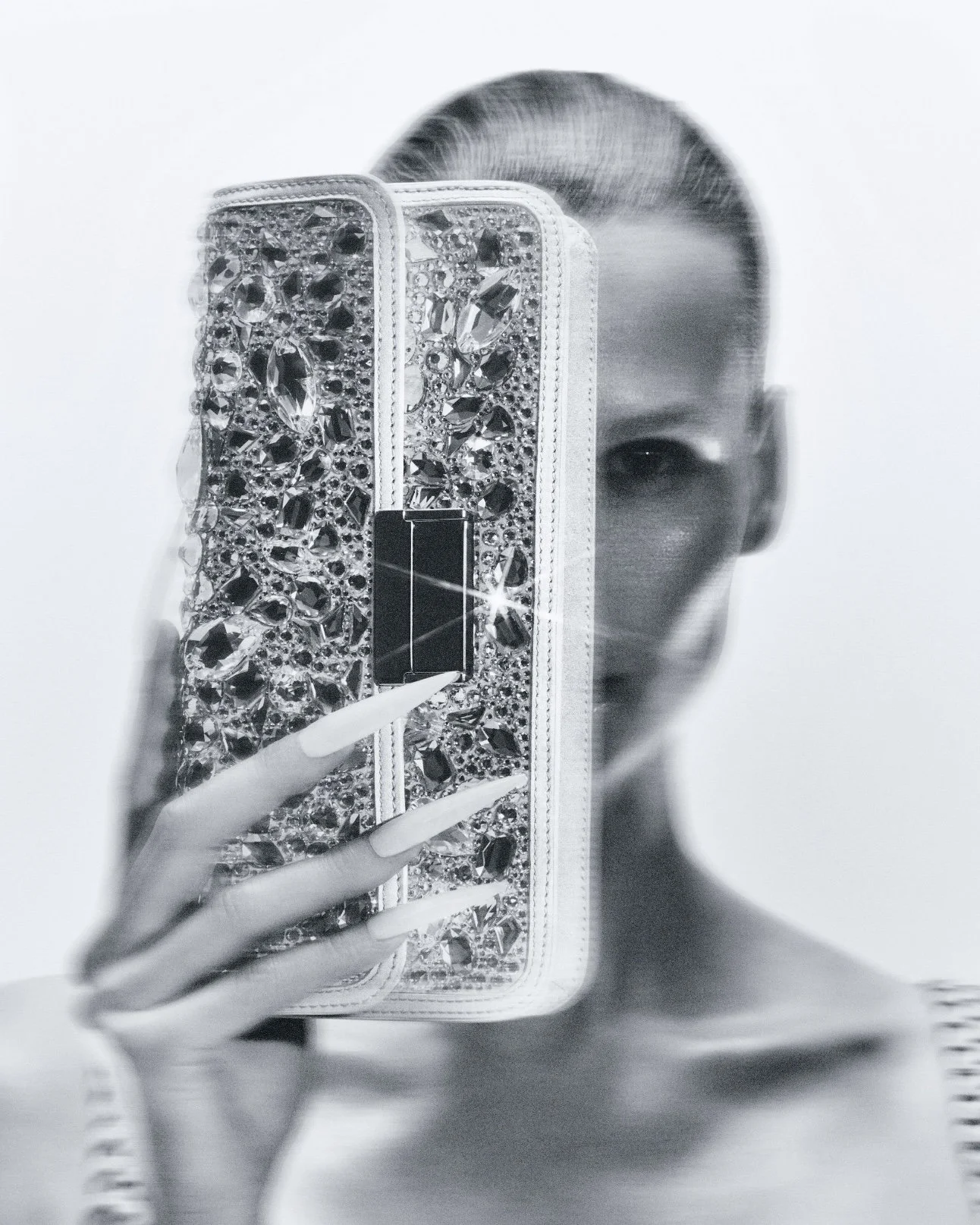
“I think of it as a kind of mental switchboard: each brand has its own universe, its own rhythm, and its own design DNA. Elie Saab lives in the realm of wearable Haute Couture: intricate, ornate, and deeply feminine. Marina Raphael, by contrast, is built on my pillars of modernity, architectural construction and experimentation of materials.”
Material Intelligence: Inside The Mind of Marina Raphael
In an industry increasingly shaped by images, simulations, and accelerated output, the most consequential decisions in fashion still happen off-screen. Long before a handbag reaches a showroom or a campaign, it’s thoroughly tested for weight, resistance, sound, texture, and durability.
For Marina Raphael, touch is not an embellishment or a sensory afterthought; it’s a form of intelligence. As founder and creative director of her eponymous brand and Artistic and Design Director of Handbags at Elie Saab, Raphael operates at the intersection of precision, heritage, and contemporary restraint. Her work is defined by structure and clarity, yet shaped by deeply tactile decision-making— from the grain of a leather to the sound a clasp makes when it closes.
We sat down with Marina this season to discuss her process with rare specificity, reflecting on the role of sensory memory, constraint, and experimentation in shaping her work. Moving between architecture and intuition, legacy and authorship, polish and private process, she offers a grounded look at how luxury is actually built: not as a finished image, but as a series of deliberate, sensory choices made long before the product exists in the world.
You’ve spoken about the essential role of touch in evaluating weight, grain, sound, and surface behaviour. Beyond the sensory details, what does “touch” actually mean to you intellectually? How does it guide your decision-making rather than simply confirm it?
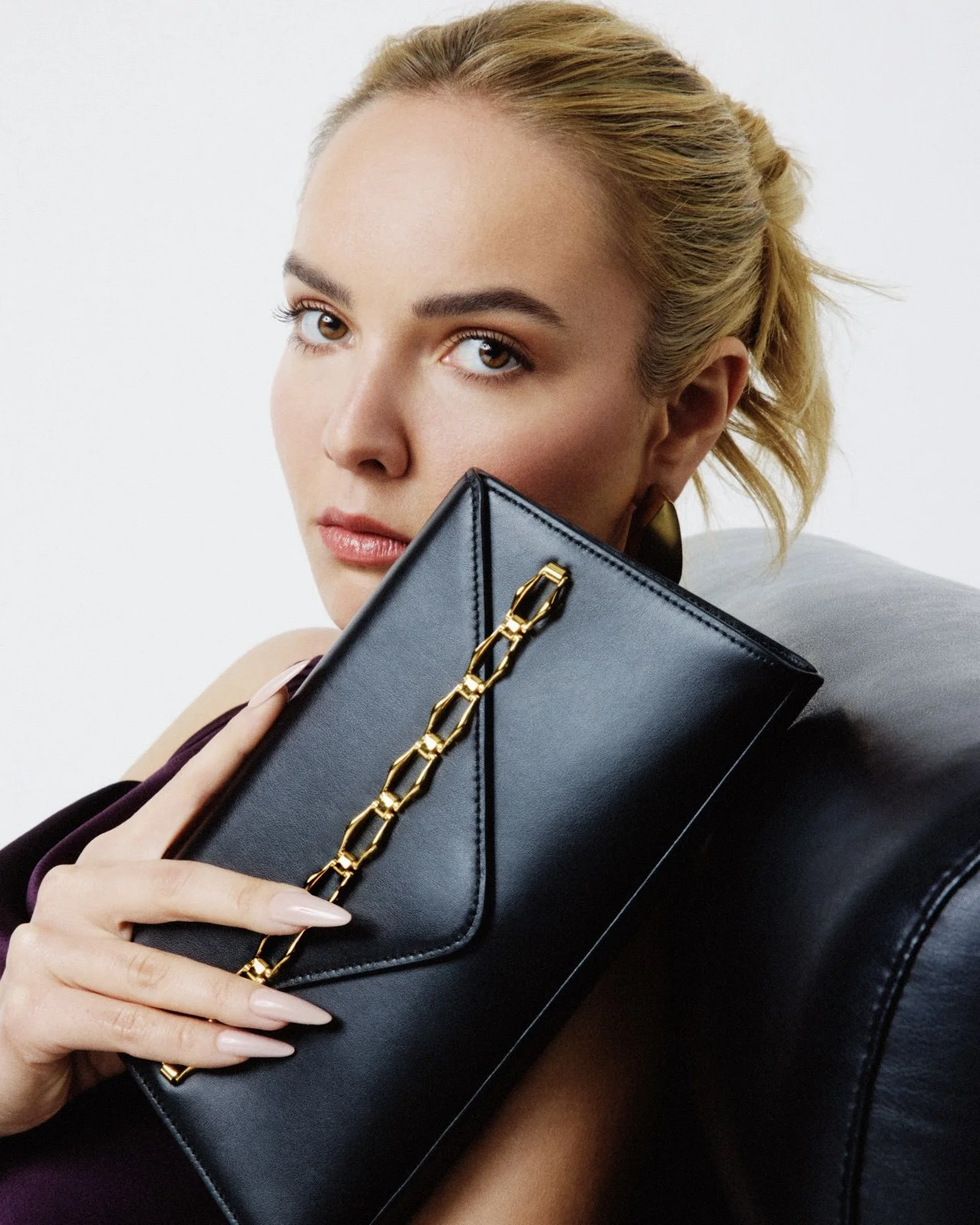
Touch is a way of thinking through tactile means. When I run my fingers over a material or panel, I’m not just asking if it feels good, but how will it age after a thousand touches? Does the resistance indicate longevity or a long-term challenge? Does it lend itself to an accessory that’s designed to be carried? For me, touch becomes a form of forecasting; for example, the way a leather rebounds after pressure tells me how a bag will behave after years of zipping and un-zipping. These indications provoke decisions, telling me when a design idea and material clash, when proportions need shifting and influencing construction choices.
In periods where touch was impossible—such as designing collections remotely—what parts of your creative logic held steady, and what broke down? What did that reveal about your process that you hadn’t understood before?
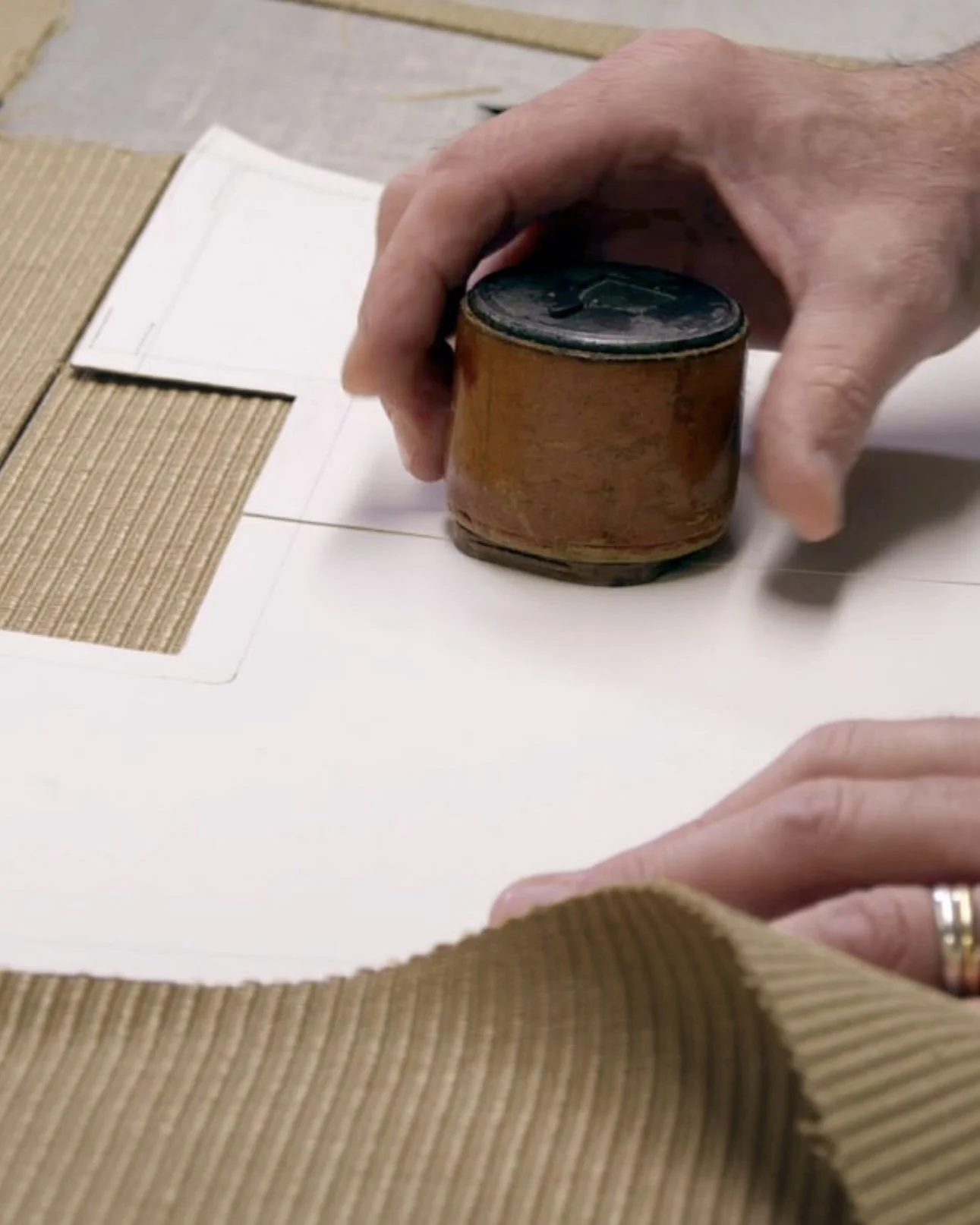
During Covid, the absence of touch from various stages of the design process led me to be guided by form even more than I had been before. I started from concept, building mood boards, refining silhouettes and incorporating functionality. What shifted was everything that normally comes alive through physical interaction with our designs: leather’s behaviour, the scale of hardware and, most of all, the instinctive problem-solving that happens when I pinch, fold, or manipulate materials within the context of their intended designs - with the limitations, these became assumptions based on experience that I had to ideate around.
I was surprised by what the process revealed to me about how deeply tactile my design process is and how much the experience of designing almost becomes muscle memory. It strengthened the importance of handling of materials with the craftspeople and artisans we work with. It also pushed me to understand the emotional and conceptual vision of a piece sooner in the process. In the end, the experience clarified the balance between intuition, material dialogue, and collaboration that defines my design process.
Your aesthetic is rooted in precision, structure, and clarity. Yet precision often hides a great deal of experimentation and mess. Where in your process does disorder live, and how do you regulate it without losing spontaneity?
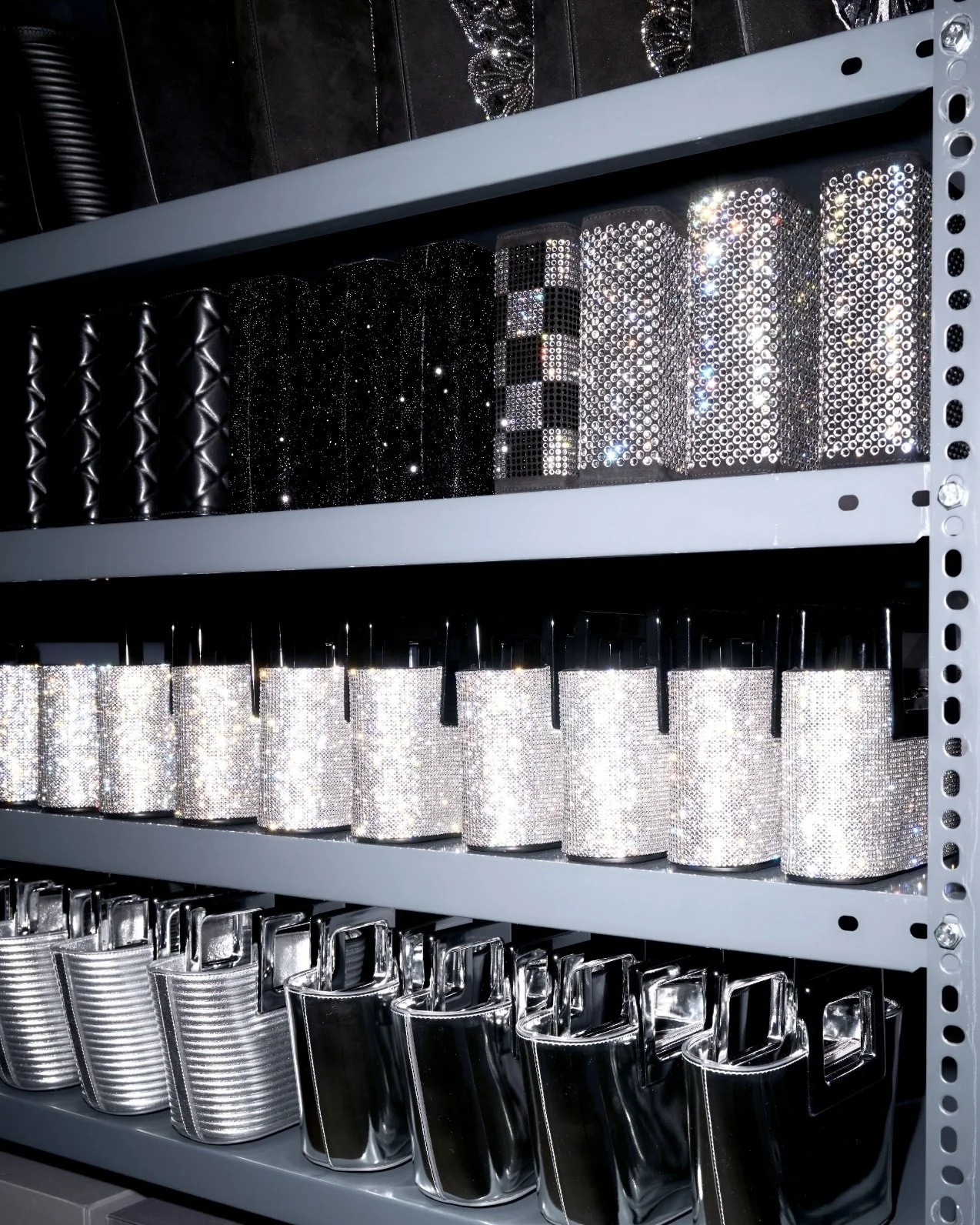
Contrary to what the final product suggests, there’s actually a surprising amount of disorder woven into the early stages of my design process. The more chaotic parts tend to live in the first wave of prototyping, wherein elements are misaligned, wrongly proportioned or issues with materiality that reveal themselves only once I’m holding them. When it comes to our specialised and limited-edition crystal pieces, these involve a lot of handcraftsmanship that happens in-house, so we’re working with orderly chaos to reveal the strongest outcome. In all cases, I let this stage stay deliberately loose and test variations that I know might fail, because those small “errors” often expose a more interesting handbag silhouette or a new structural possibility. The final refinement comes later down the line, once the raw ideas are on the table. I love this balance because it allows my version of chaos to spark invention and ideas, keeping an element of spontaneity while ensuring the final bag has the quiet, intentional precision the Marina Raphael brand is known for.
When you’re developing a new silhouette or material treatment, what’s an example of a moment where your instincts overruled your initial rationale—or vice versa?
One of the clearest moments is the process that eventually became the MICRO STELLA top- handle bag. I had initially built it around a very stiff napa leather that, on paper, promised the structure and perfect geometry that I had in mind, yet the first prototype felt rigid and flat, technically correct but lacking life. Whilst I instinctively veer towards the more structural option, this pushed me to work with a subtly softer suede leather that allowed for mobility across the rounded top flap. It contradicted the structure and rigidity I had set out to design with, yet the moment I touched it, the bag finally felt alive and wearable. The opposite can also be true: I’ll fall for a slouchier fabric, a softer curve or a delicate fold, only for rationale to remind me the construction can’t support it or the hardware will weigh it down. In those moments, I veer towards my design disciplines.
As a sixth-generation member of the Swarovski family, the expectation of polish and public composure is significant. How do you maintain a private creative identity that isn’t shaped by legacy, and where do those two selves collide?
Growing up as part of the Swarovski family, I’ve come to see legacy not as a weight but as a guiding light, something that grounds me while giving me the confidence to explore my own creative instincts. My most exploratory moments happen in the quiet spaces where I can freely create: sketching without an agenda, building a crystal world I’ve imagined or following a material or silhouette simply because it sparks curiosity rather than because it looks “finished.” It’s also in those moments that the values I was raised with often surface: the emphasis on craftsmanship, attention to detail, and innovation are deeply ingrained in my creativity, gently guiding my process. I see it as a guide rather than a restriction, one I’ve come to cherish - one that has helped shape my design DNA.
What misconceptions do you encounter most often about inheriting a legacy—creative, cultural, or familial—and which ones do you actively work against in your practice?
One of the misconceptions I encounter most often is the idea that inheriting a legacy makes everything almost effortless; that doors simply open and the work somehow becomes easier. I feel incredibly fortunate to come from a family with such a rich creative history and I never take that privilege for granted, but legacy can’t replace the daily discipline, experimentation, and resilience required to build something of your own, nor the passion to make it come to fruition.
Another misled idea is that my work should look or feel like an extension of my family’s history. While I carry deep respect for Swarovski’s 130 years of craftsmanship and innovation, my own aesthetic and design ambitions for my brand are the reason it exists. I use this as motivation more than anything, pushing me to believe more strongly and readily in my own vision. Heritage and individuality don’t need to be mutually exclusive. What I try and demonstrate through my work is that you can honor where you come from while forging a path that is distinctly your own. I’m deeply grateful for the foundation my family’s legacy has given me, but building a brand, especially in the luxury space, doesn’t happen on a last name alone: it demands absolute dedication, risk-taking, evolution and perseverance.
Italian artisanship and innovation are both central to your brand. In practice, those two values often sit in tension. Can you share a moment where pushing innovation risked undermining traditional craft—or where craft imposed constraints you had to reinvent around?
This happened during the process of developing a clutch where I wanted the body to have an architectural sharpness yet still feel warm and tactile when held. The concept relied on a new lightweight internal structure that would allow the leather to hold a very precise silhouette. But when I brought the idea to our Italian artisans, it became clear that the structure risked overpowering the leather rather than supporting it. They explained that over time the material wouldn’t age well but instead, it would fight against the rigidity instead of working with it.
What initially felt like a setback became a pivotal moment. Their feedback forced me to rethink the problem, not by abandoning the innovation, but by adapting it. Together, we experimented with hybrid methods: a more flexible core and a layering technique that allowed the bag to maintain its geometry while still honoring the natural behavior of the leather. The final result was stronger precisely because it respected both worlds.
Conversely, there have been moments where traditional craft-imposed limits I had to reinvent around. For example, I designed a handle featuring a continuous, seamless curve that was nearly impossible to achieve using standard techniques without compromising strength. Instead of simplifying it, we reimagined the process, by creating a custom mold that preserved the integrity of the shape while still being entirely hand-finished. Often, the strongest designs are born exactly at that intersection, where respect for tradition becomes the foundation for something new.
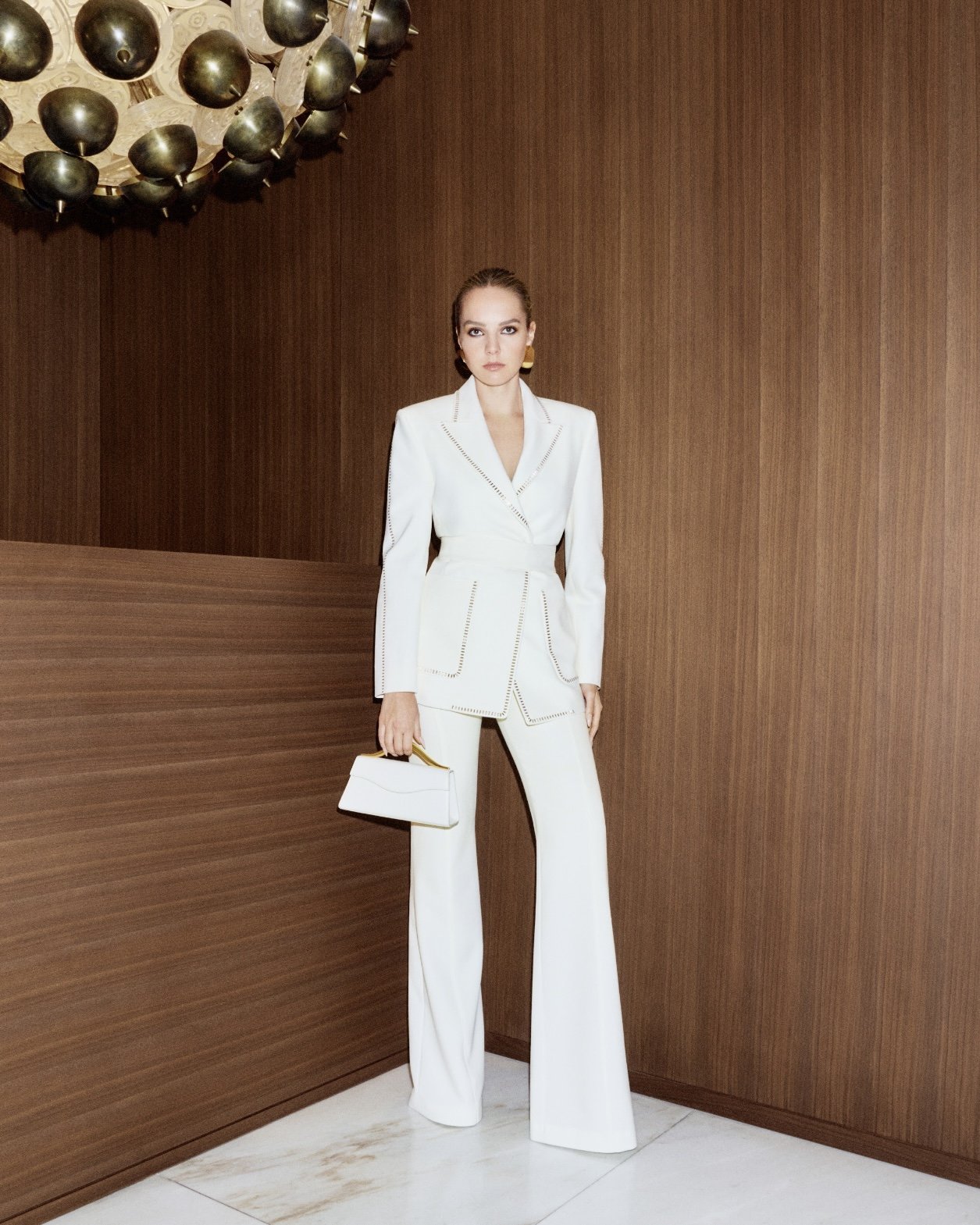
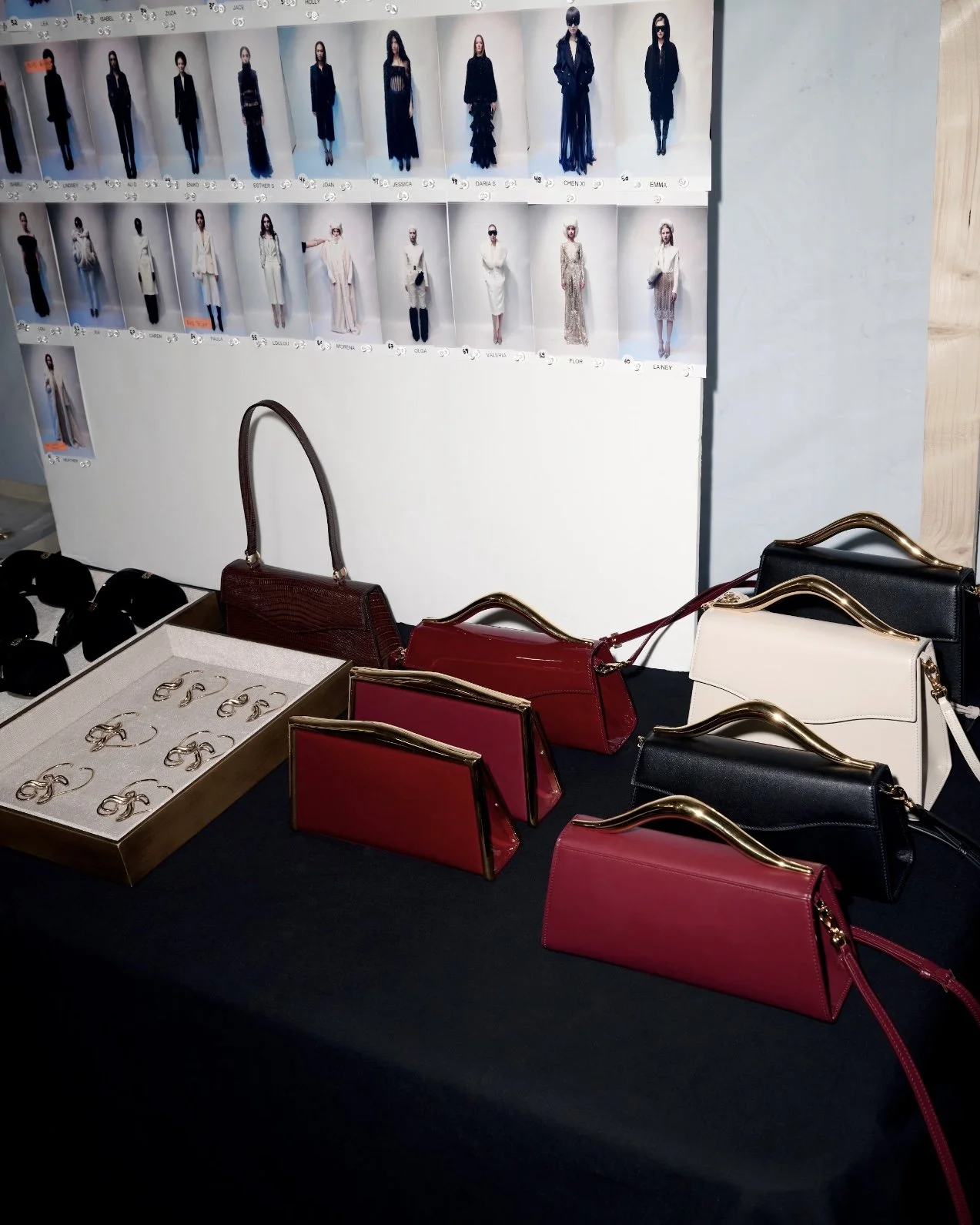
Luxury clients increasingly expect both emotional resonance and technical excellence. How do you design for a customer who wants to “feel” something before they understand it?
For me, that often means putting the sensory elements at the forefront of my process, which is true of how I conceptualized our signature plexiglass rectangular handle. Its smooth, sculptural touch against the warmth of the leather creates an instant emotional reaction, bridging novelty and refinement before the customer has processed any of the details. That first contact sets the tone: the bag should speak through sensation as much as through aesthetics.
But behind that initial spark, it’s the handle’s geometry, the precision of its construction, the polished edges, the balance of weight which are all are engineered to feel effortless in the hand. From the way the curve moves around the edges of our signature RIVIERA, to the softness of the leather, every detail is meant to reveal itself gradually. In this way, the connection is both instinctive and emotional: you can fall in love with a piece from the offset and, in time, understand why the craftsmanship supports that feeling.
You occupy two distinct roles: founder and creative director of your own brand, and Artistic & Design Director of Handbags at Elie Saab. How do you compartmentalize your thinking across these identities— and what cross- pollination do you allow intentionally?
I think of it as a kind of mental switchboard: each brand has its own universe, its own rhythm, and its own design DNA. Elie Saab lives in the realm of wearable Haute Couture: intricate, ornate, and deeply feminine. Marina Raphael, by contrast, is built on my pillars of modernity, architectural construction and experimentation of materials. Whilst there are elements that bridge the two, the worlds are so distinct that I naturally compartmentalize each and approach them with different creative mindsets.
That said, I do allow a controlled amount of cross-pollination which feels natural as a designer and creative. At Marina Raphael, this manifests in the tension between our signature plexiglass handle and soft napa leather. At Elie Saab, I reinterpret that contrast in a completely different language, pairing strong metal accents with raffia, embossed exotics, or couture-inspired textures. The gestures echo one another, but the expression is entirely brand- specific.
Working within the vocabulary of another house means inheriting its codes and boundaries. What is the most productive constraint you’ve encountered at Elie Saab, and how has it sharpened your own sensibilities?
The House of Elie Saab has a deep commitment to couture-level ornamentation, every detail carrying a sense of refinement and poetry. Coming from my own brand where the design language is architectural and often defined by bold contrasts and strong materials, I have to recalibrate my instincts to be driven by the femininity, intricacy, and delicacy Elie Saab is known for. Instead of feeling limiting, that constraint sharpened my creativity and technical strengths. It taught me to approach embellishment not as decoration, but as structure, to understand how embroidery, metal accents, or couture textures can become part of the architecture of a bag rather than something applied onto it. It also pushed me toward a more nuanced sense of proportion and softness. Creating within Elie Saab’s universe has made me more intentional about how I balance strength and delicacy, and more attuned to how craftsmanship can convey emotion with absolute subtlety. Ultimately, working within another house’s codes has expanded my vocabulary, making my work more multidimensional than before.
What does a “failed” prototype teach you that a successful one cannot? Can you recall a specific failure that meaningfully altered your understanding of materials or structure?
The ones that don’t work often teach me the most because they reveal the gap between intention and reality; the moment where an idea meets the truth of materials, structure, and proportion. Early in my career, before I had developed more of a technical fluency, I went through countless rounds of prototypes while developing my first Marina Raphael collection that simply didn’t work in the real world. I was still learning how dimensions translate from sketch to object, how a millimeter can change the entire attitude of a silhouette.
For example, one of my early designs was a bag with a beautifully crisp, geometric outline on paper, but once produced, everything collided in the wrong way: the proportions felt off, the structure didn’t support the silhouette, and the material behaved in ways I hadn’t anticipated. It looked nothing like the uniquely elegant bag I’d imagined. But the lessons in these situations are so valuable - it taught me how weight distributes through the handle, how reinforcement affects drape and how thickness or skiving can transform the personality of a leather, amongst countless other learnings. The early ‘failures’, in particular, taught me to listen to materials and to respect the intelligence of craftsmanship. I often think those imperfect prototypes shaped me far more than the pieces that worked immediately.
You often reference architectural principles in your work. Architecturally speaking, what is the load-bearing element of your creative philosophy—the idea that everything else rests on?
The architectural elements are more than just a design sensibility: it’s the story from which I build, based on the philosophy that a bag is more than just a container to hold our belongings. This means starting every design with a structural vision: silhouettes that feel purposeful, handles that define posture and proportions that delicately balance form and function. From that foundation comes everything else: the emotional connection, the functional ease, the finishing touches. I see it as the underpinning to the entire Marina Raphael design ethos, ensuring that the architectural nature of our bags feels purposeful, anchored in the modernity of our craftsmanship, built from the inside out. Structure shapes purpose, and from there the bag develops its personality.
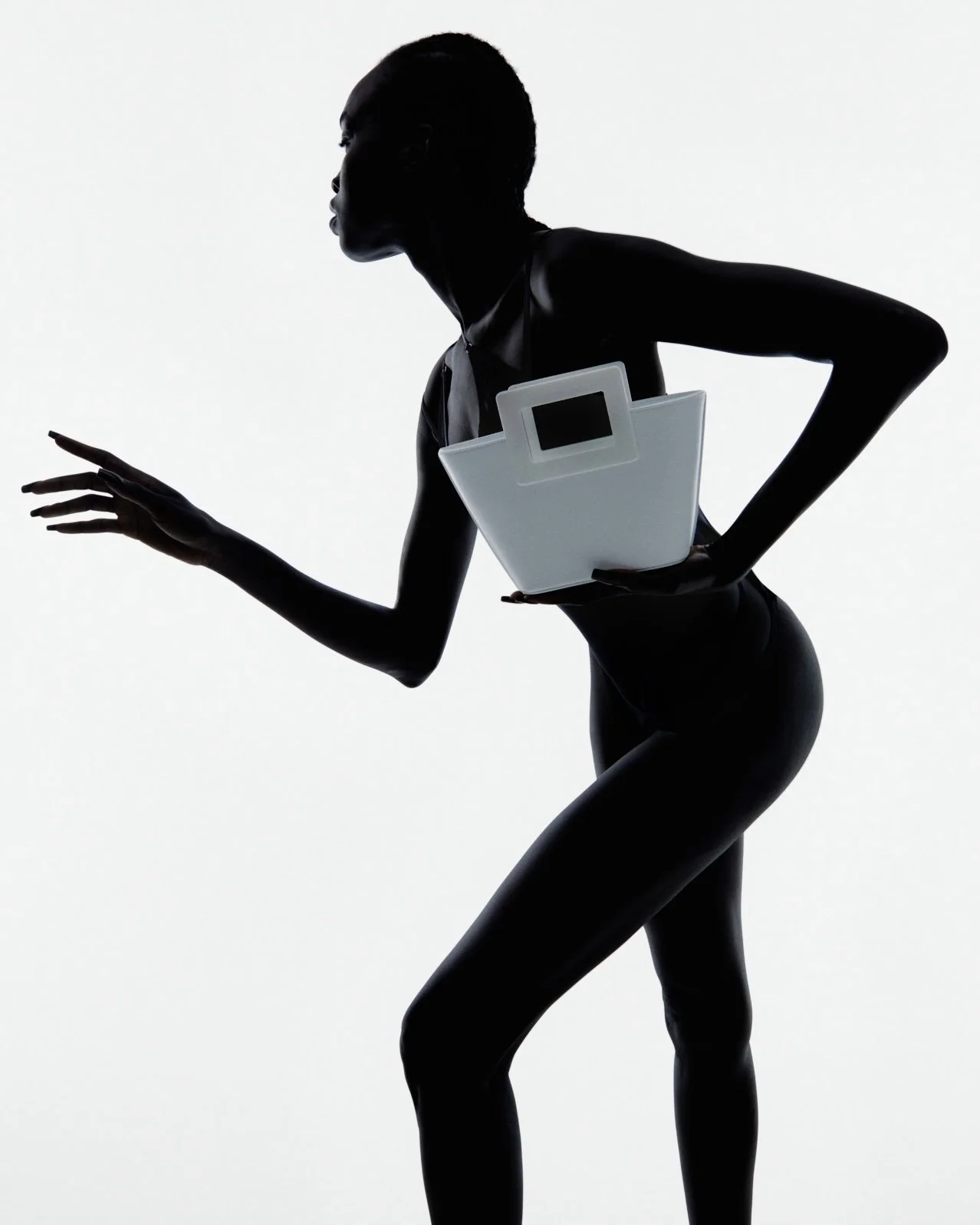
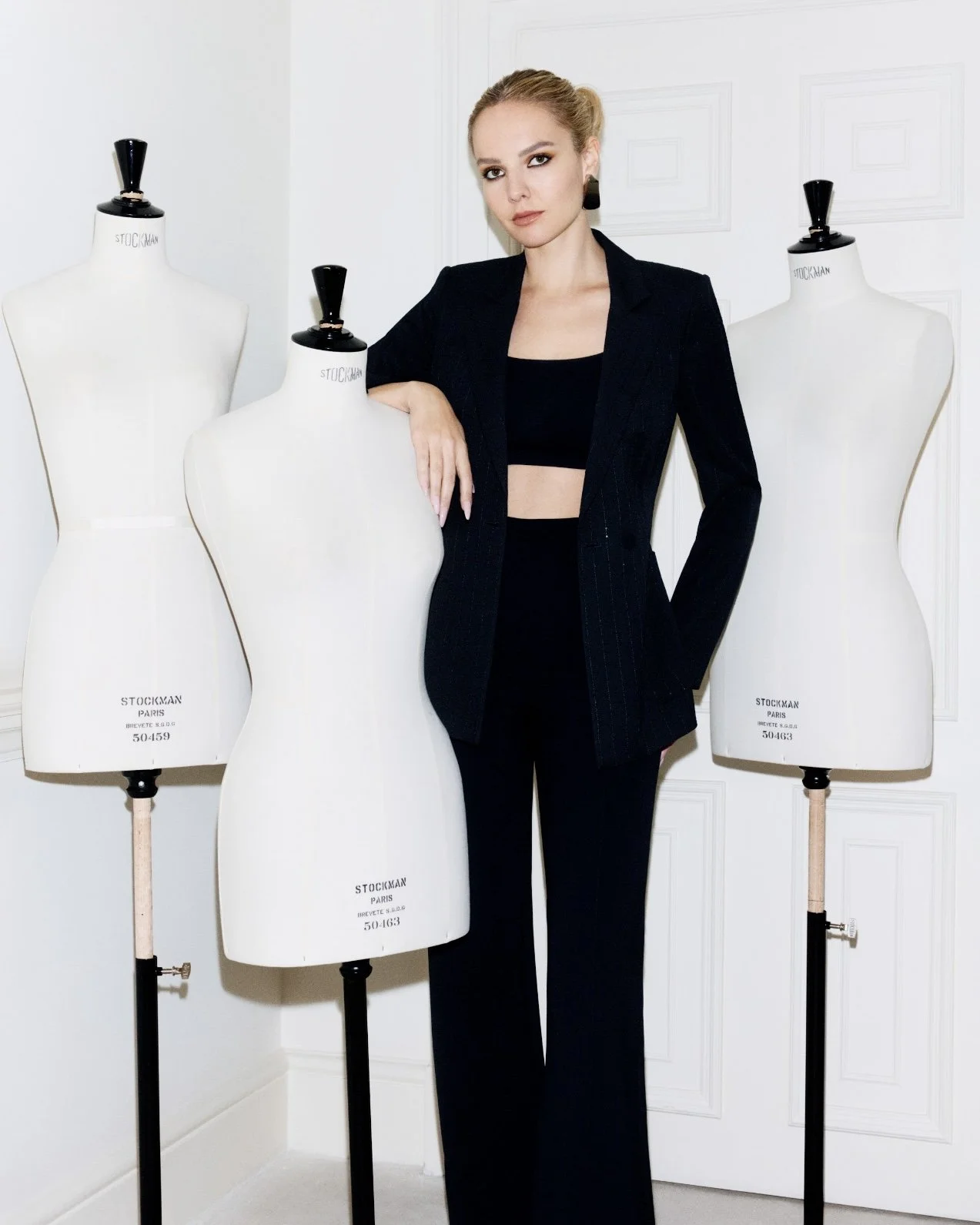
Designing handbags involves choreographing micro-moments: a clasp sound, a handle temperature, the resistance of a flap. Which sensory detail do you obsess over that most people would never notice, and why does that detail matter?
The weight and finish of the metal is a daily design obsession for me. In a luxury handbag, metal shouldn’t feel light or hollow and instead, it should have a reassuring density when you touch it; I obsess over that delicate moment when a client lifts a handle or opens a buckle because it communicates so much about the quality of the entire piece. I spend a lot of time adjusting thickness, tone, and polish so the hardware has both visual depth and the right tactile temperature. The same goes for the zipper glide which should happen in one smooth, unbroken motion, so if there’s even a hint of friction, the whole experience feels compromised. Most people won’t consciously analyze why a bag feels satisfying to use, but they sense it immediately. These micro-moments matter because they build trust, each small, luxurious gesture reinforces that the bag is crafted with intention.
You’ve built a brand that blends modernism with tradition. Looking ahead, what do you believe the next generation of luxury handbags will ask of designers—materially, ethically, or experientially—that today’s models don’t yet address?
Personally, I believe we’re headed in a direction where material innovation, ethics, and experience are inseparable. We’re already looking to textiles that are lower in impact but feel just as luxurious as traditional leathers, as well as hardware and finishes that meet high standards without compromising sustainability. Ethically, luxury will need to champion true transparency and long-term artisan partnerships, treating craftsmanship not just as production but as cultural stewardship - something we keep central to our ethos as a brand. But I also believe that the experience will be just as important: handbags will need to offer experiential and emotional value rather than just being objects to acquire or trend-driven moments we’ll leave behind. The future client wants quiet excellence; bags that are visually compelling but also thoughtful, responsible, and deeply personal whether from a design or client standpoint.
If you stripped away the expectations of legacy, market, and brand identity, what is the creative risk you would take tomorrow that you aren’t taking today?
Without a doubt, I would push much further into the sculptural and experimental elements of design. I’d love to create pieces that sit closer to objets d’art than wearable handbags: bold forms, unconventional proportions and materials chosen purely for their beauty or intrigue rather than their durability. If you gave me a setting in which practicality wasn’t a driving force, I’d have the space to explore ideas that don’t have to survive daily wear, weight tests, or long-term resistance. But the reality is that designing in today’s luxury market always requires balancing creativity with commerciality: pieces have to be wearable, naturally, as well meeting strict production standards.
That naturally limits the materials and techniques we can use, even when more delicate, less practical options would be incredibly exciting to experiment with. So, the creative risk I’m not taking today is giving myself the freedom to explore those horizons without the constraints of product guidelines. I would love to have moments where I design simply for the sake of exploration, with no requirement other than following the idea to its furthest, most ambitious form. For now, the closest I come to that scenario is our Limited-Edition collection, in which I get to create magic in the knowledge that these one-off creations are the space I need to design without the constraints of everyday wear.
