The Book Club Effect: Turning Literary Curation into a Branding Strategy
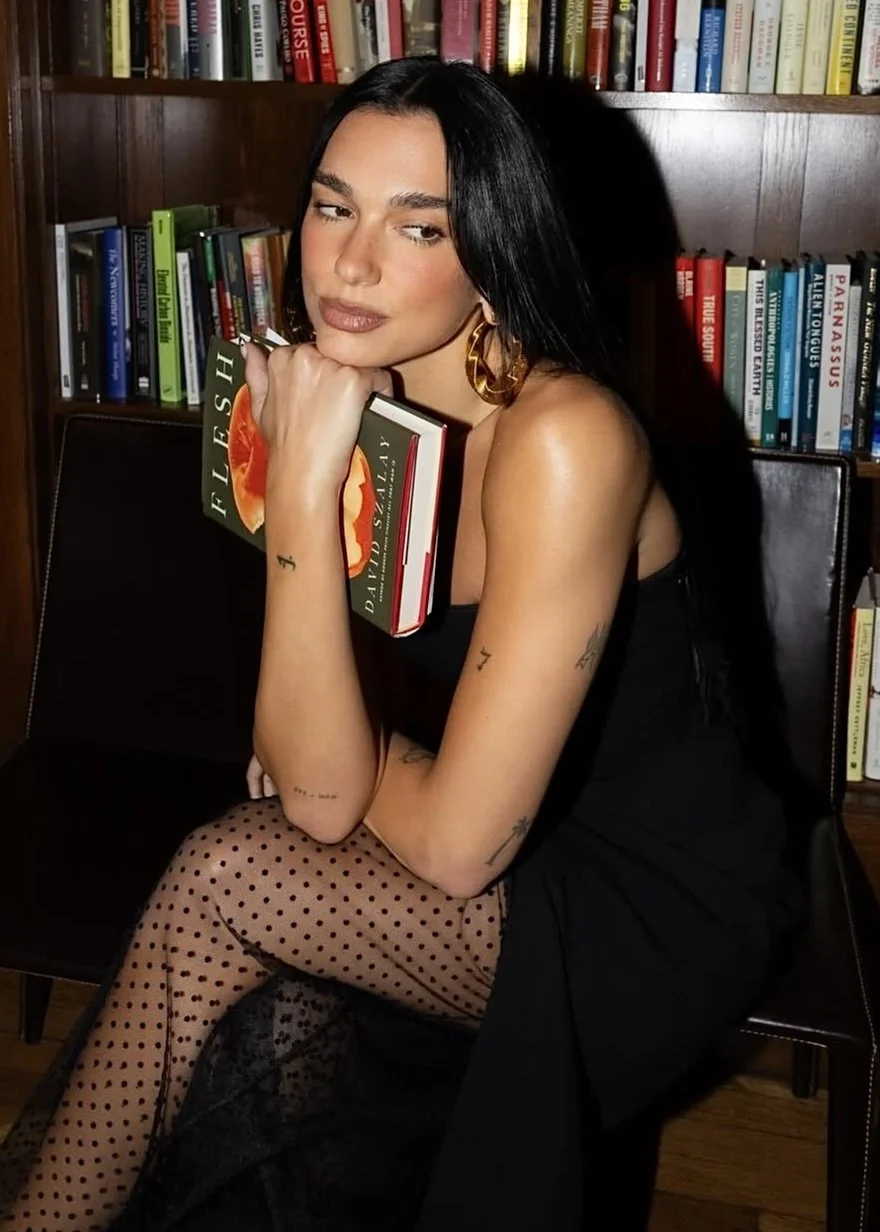
In a culture obsessed with speed and virality, influence increasingly hinges on discernment, sophistication, and cultivated taste. Celebrity-run book clubs extend the salon’s legacy into the digital era, curating reading lists, hosting intimate or virtual gatherings, and transforming books into platforms for style, influence, and cultural dialogue.
The Book Club Effect: Turning Literary Curation into a Branding Strategy
In recent years, fashion campaigns have moved beyond billboards and Instagram reels, finding a subtle new stage: the book club. From curated reading lists accompanying seasonal drops to designer-endorsed selections, fashion brands are tapping into the intellectual intimacy of reading to signal taste, sophistication, and cultural capital. Once a space for quiet reflection and shared curiosity, reading has now become a tool of luxury marketing— a way to signal refinement in a world dominated by fleeting trends and viral content.
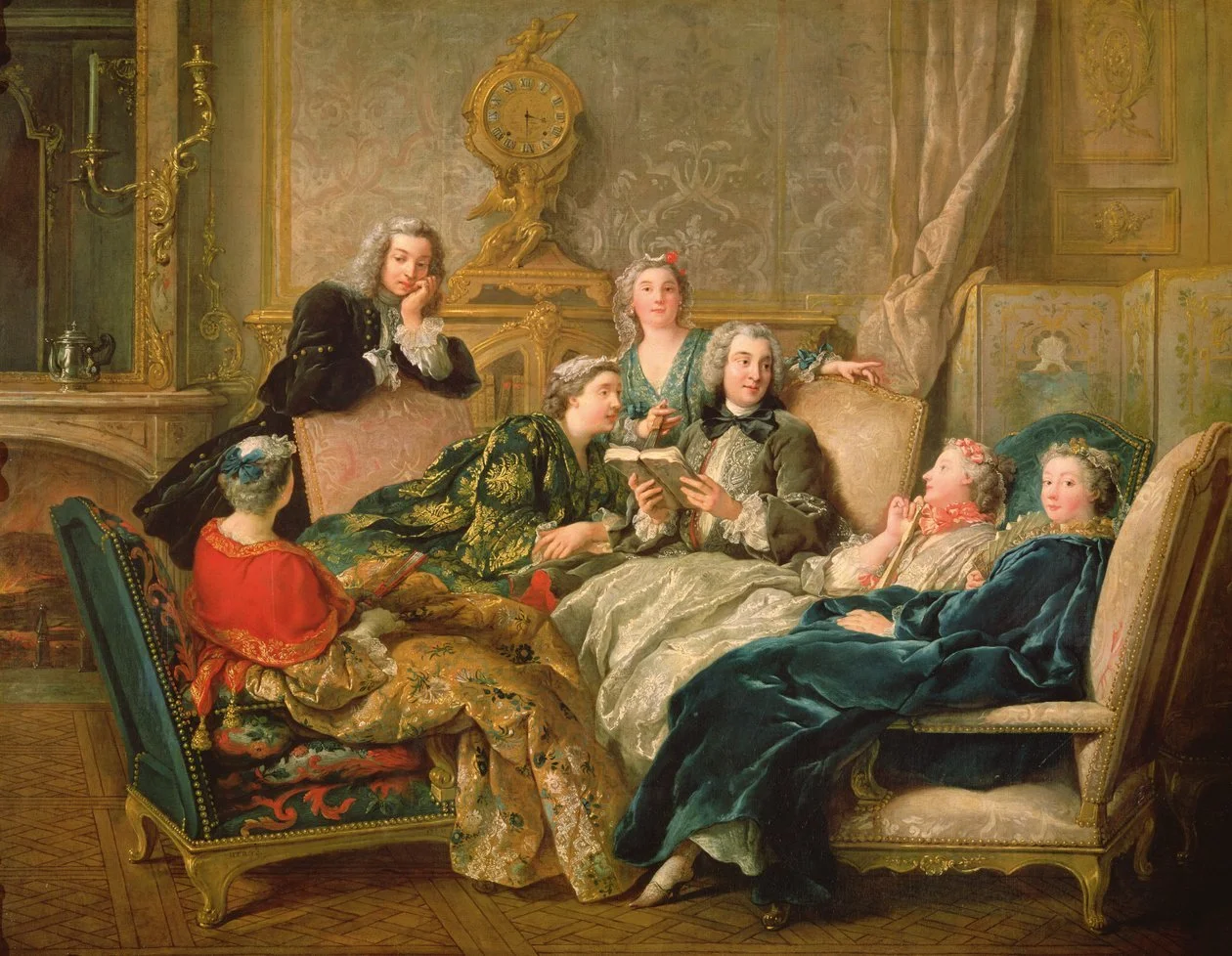
The Reading from Molière (c. 1728) by French artist Jean-François de Troy
Long before celebrity book clubs or invite-only gatherings, the Salon was the ultimate arena of cultural curation. Women shaped discourse, art, and taste with quiet authority. Giovanna Dandolo, wife of Doge Pasquale Malipiero, exemplifies this: between 1457 and 1462 in Venice, she gathered artists, poets, and thinkers, creating a space where ideas and aesthetics flowed as freely as influence. Her legacy begins a lineage perfected by Madame de Rambouillet, whose Chambre Bleue became a haven for refined conversation; Madame Geoffrin, who curated the Enlightenment with editorial precision; and Gertrude Stein, whose Paris apartment became the crucible of Modernism. These women turned private rooms into cultural stages— proof that hosting, when done with intention, is a form of authorship.
Fashion Houses as Modern Curators
Today’s fashion-literature convergence isn’t accidental; it’s a response to a cultural moment defined by digital fatigue, algorithmic sameness, and a renewed hunger for discernment. As virality flattens aesthetics and accelerates trend turnover, brands are reaching toward books— symbols of depth, longevity, and cultivated taste— to anchor themselves in something more enduring than the feed.
Luxury fashion houses are reviving this salon ethos, using literature to craft refined storytelling and cultural authority. Chanel’s Rendez-vous Littéraires at Rue Cambon, hosted by ambassador Charlotte Casiraghi, gathers women writers, poets, and friends to explore creativity, emancipation, and legacy: a dialogue reflecting the House’s philosophical codes. Prada’s Spring/Summer 2025 Ten Protagonists campaign pairs ten short stories by Ottessa Moshfegh with Carey Mulligan’s embodied personas, creating both a literary experiment and a visual anthology. Miu Miu’s 2024 Summer Reads pop-up transformed public parks into ephemeral salons, distributing feminist classics from branded kiosks, extending intellectual playfulness into the public sphere.
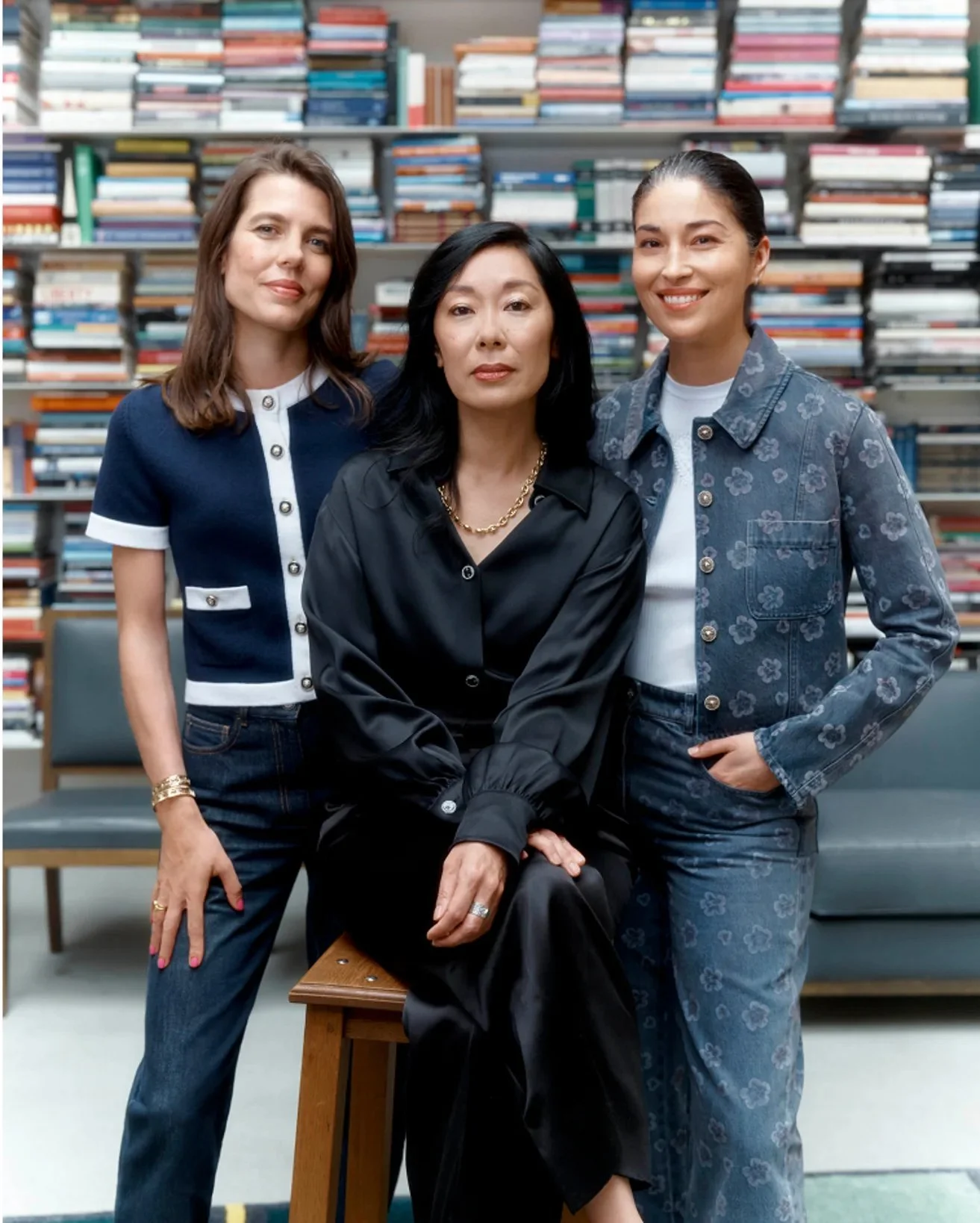
"Literary Rendezvous at Rue Cambon" event hosted by Chanel
In another vivid example, Chanel has recently inaugurated Espace Gabrielle Chanel at Shanghai’s Power Station of Art— mainland China’s first public library wholly dedicated to contemporary art and design. The 1,700-square-metre space holds over 50,000 books and audiovisual materials spanning art, architecture, design, culture, and social sciences, and will host a Chinese Contemporary Art Documentation Centre. Rather than serve purely as a marketing gesture, this library functions as cultural infrastructure— a tangible investment in intellectual capital, cross-cultural exchange, and long-term legacy. It demonstrates that luxury houses today are not just selling aesthetics but actively curating knowledge, taste, and cultural influence at scale.
Celebrity Clubs and the Enduring Salon Spirit
Other houses leverage literature as metaphor and setting. Brunello Cucinelli likens books to the sustenance of the soul in The Granary of the Spirit, and his Fall/Winter 2025 campaign embodies this philosophy. Loewe’s Fall/Winter 2018 campaign cast Stella Tennant with Don Quixote, merging literary gravitas with fashion storytelling. In 2019, Dolce & Gabbana staged Alta Sartoria in Milan’s Biblioteca Ambrosiana, blending sartorial grandeur with centuries of literary history. Saint Laurent’s 2024 campaign, inspired by Proust, evoked In Search of Lost Time through short films and vignettes, reinforcing the brand’s cultivated identity. Across these houses, literature is no longer a prop; it’s a conduit for cultural capital— a way to curate conversations, signal taste, and position brands beyond trend-driven cycles.
Dua Lipa marked the start of NYC WEEK this year with a live recording of her Service95 Book Club at the New York Public Library.
In a culture obsessed with speed and virality, influence increasingly hinges on discernment, sophistication, and cultivated taste. Celebrity-run book clubs extend the salon’s legacy into the digital era, curating reading lists, hosting intimate or virtual gatherings, and transforming books into platforms for style, influence, and cultural dialogue. Kaia Gerber and Alyssa Reeder’s Library Science (2024) highlights underrepresented voices, offering readers a space for discovery. Emma Roberts and Karah Preiss’s Belletrist (2017) translates friendship into a monthly ritual for discerning readers. Reese Witherspoon’s Reese’s Book Club champions women-centered narratives; Dua Lipa’s Service95 pairs selections with author conversations. Emma Watson’s Our Shared Shelf remains a reference for curated, intellectual reading, while Dakota Johnson’s TeaTime Book Club continues the tradition through Instagram broadcasts and author interviews. These modern salons prove that even in a fast-moving, algorithm-driven world, influence rooted in taste endures.
From Venetian and Parisian salons to campaigns by Prada, Chanel, Miu Miu, and Brunello Cucinelli, and onward to celebrity book clubs, literature has consistently conveyed cultural authority. Whether hosted by influential women or leveraged by luxury brands, these gatherings demonstrate that taste, intellect, and careful orchestration of ideas create prestige beyond fleeting trends. In today’s digital landscape, where virality dominates, fashion houses increasingly turn to books and literary programming to project a deliberate, thoughtful identity— one defined by curation, refinement, and eloquence. Ultimately, the salon’s spirit endures. Influence, anchored in intellect and cultivated taste, remains timeless.