Powder, Pistes, and Prada: Après Ski, Before the Spectacle
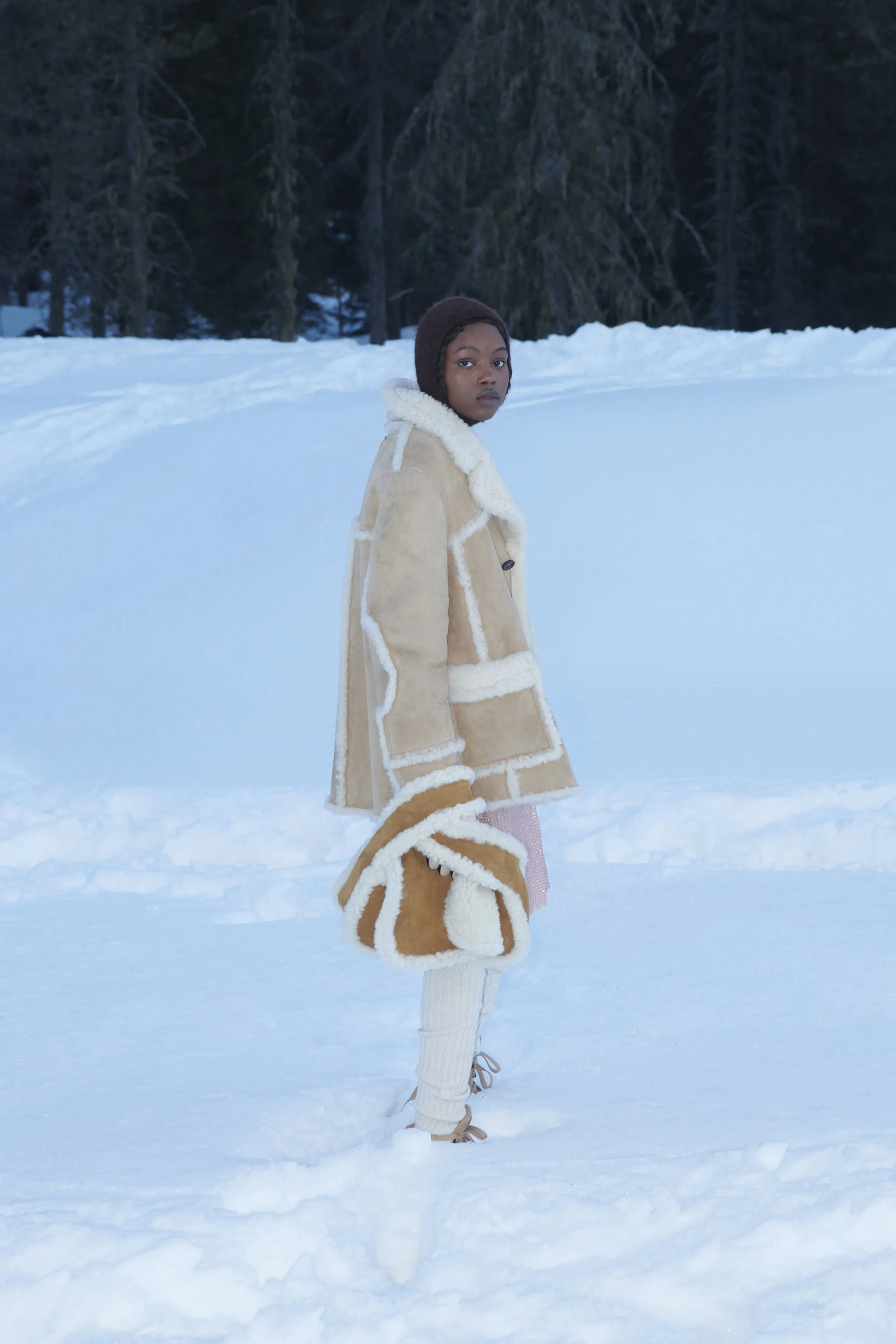
The sport’s high-fashion appeal isn’t accidental. Skiing has long been tied to wealth— chalets, season passes, designer ski wear. Resort wear turns a vacation into an excuse for a curated wardrobe, reinforcing consumption and status. Photo: Miu Miu
Powder, Pistes, and Prada: Après Ski, Before the Spectacle
There’s a particular kind of quiet that drapes over Gstaad in winter, like freshly fallen snow muting the hum of the world. Chalets perch along winding streets, smoke curling lazily from chimneys, and the mountains rise in crisp, postcard-perfect lines. It’s easy to see why the town has become synonymous with luxury skiing. But Gstaad is more than a backdrop for Instagram shots.
Travel here isn’t a modern invention. Visitors arrived as early as the 18th century, and by the 1900s the Montreux-Oberland railway made the slopes accessible to more tourists. Mid-century growth came thanks to visionaries like Paul Valentin and the cable car to Les Diablerets. By the 1980s, a network of lifts and routes had turned skiing into a fully realized leisure industry. While locals work to preserve its traditions and authenticity, the town’s history reminds us that its beauty is not just a playground for the wealthy.
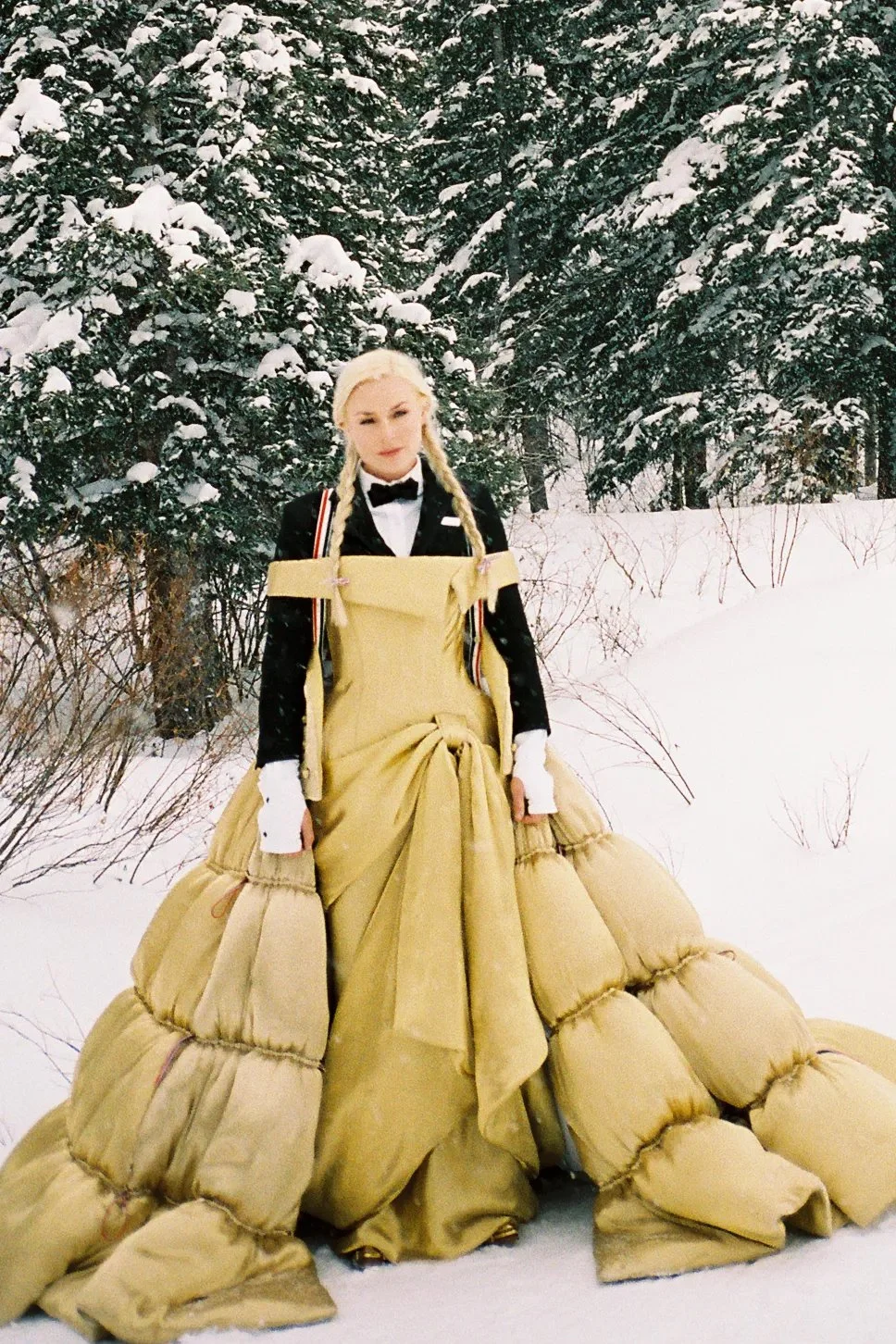
Lindsey Vonn in Tom Ford. Photo: Emma Louise Swanson
From Slopes to Style
Skiing and fashion have been intertwined for over a century. Designers like Lucien Lelong, Edgidio Scaioni, and Madeleine Vionnet transformed practicality into style with two-piece pantsuits and knit accessories, while Norwegian trousers in the 1930s offered an alternative to skirts. Emilio Pucci’s one-piece suits and Massimo Giorgetti’s colorful uniforms of the 1940s caught Diana Vreeland’s eye, earning space in Harper’s Bazaar. By the 1950s, “après-ski” entered the lexicon, and Maria Bogner’s stretch ski pants— sported by Marilyn Monroe, Jackie Kennedy, and Brigitte Bardot— brought both color and celebrity to the slopes. The decades that followed saw space-age prints, bold colors, and media moments from Princess Diana’s ski trips to George Michael’s Last Christmas, solidifying ski fashion as aspirational and visible.
Today, designers continue to fuse slope and street. Chanel, Fendi, Gucci, Miu Miu, Thom Browne, and Moncler have all launched capsule collections or immersive shows that celebrate winter style, blending technical performance with high fashion. These collections are less about logos and more about color, texture, and atmosphere: a ski wardrobe that signals both taste and affluence. Films like Charade and short fashion movies starring Lindsey Vonn show that ski chic has long extended beyond the mountain, into culture itself.
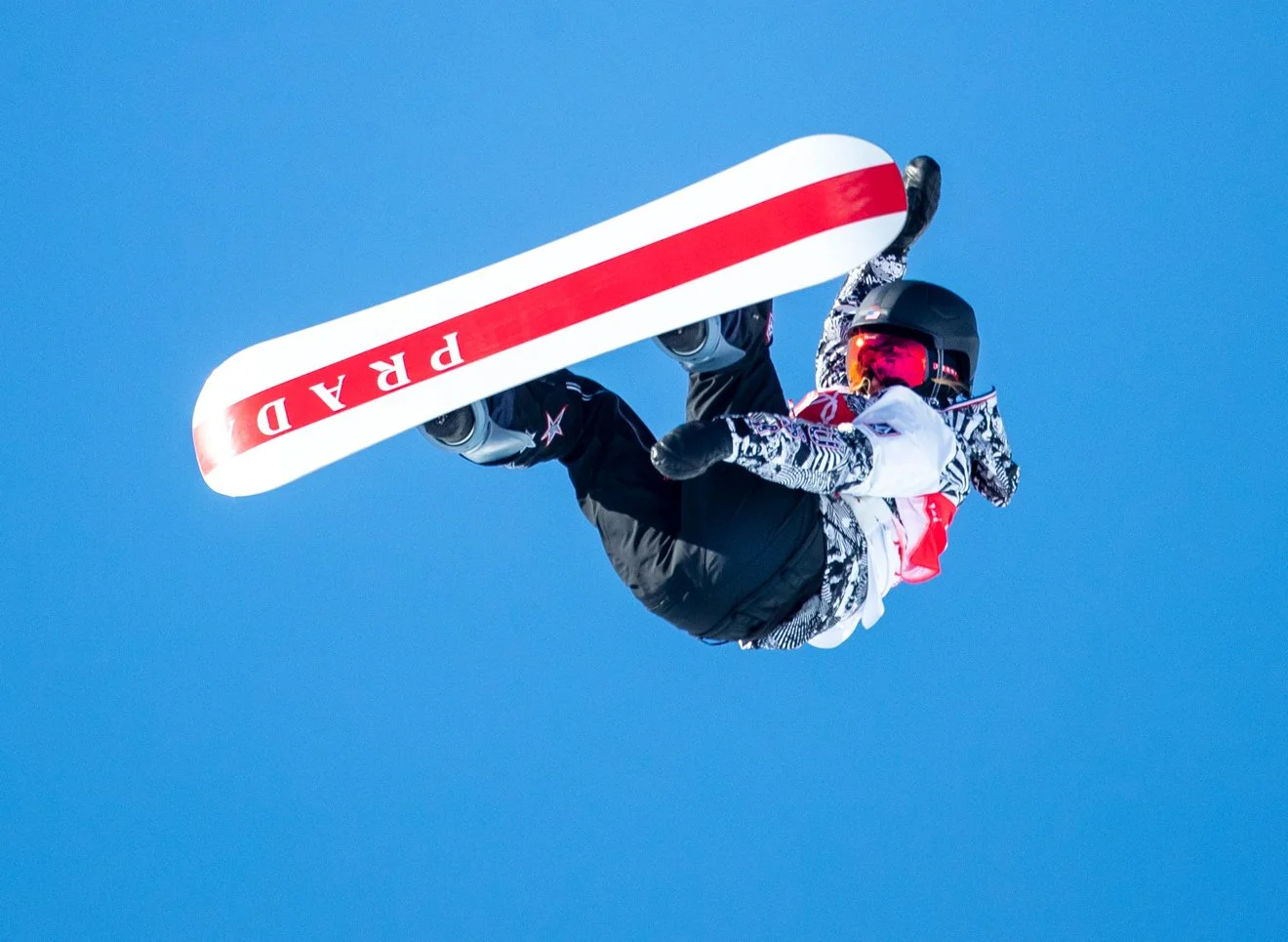
U.S. snowboarder Julia Marino during her silver-medal performance in the Snowboard Slopestyle Final at the 2022 Beijing Winter Olympics. Photo: Tim Clayton/Corbis/Getty Images
Skiing, Luxury, and Culture
The sport’s high-fashion appeal isn’t accidental. Skiing has long been tied to wealth— chalets, season passes, designer ski wear. Resort wear turns a vacation into an excuse for a curated wardrobe, reinforcing consumption and status. Social media amplifies this effect: every photo in premium skiwear communicates both taste and capital. Gstaad Guy, the content creator who mocks the town’s elite, captures this perfectly, highlighting the absurdity of luxury obsession while remaining anonymous enough to let the satire speak for itself.
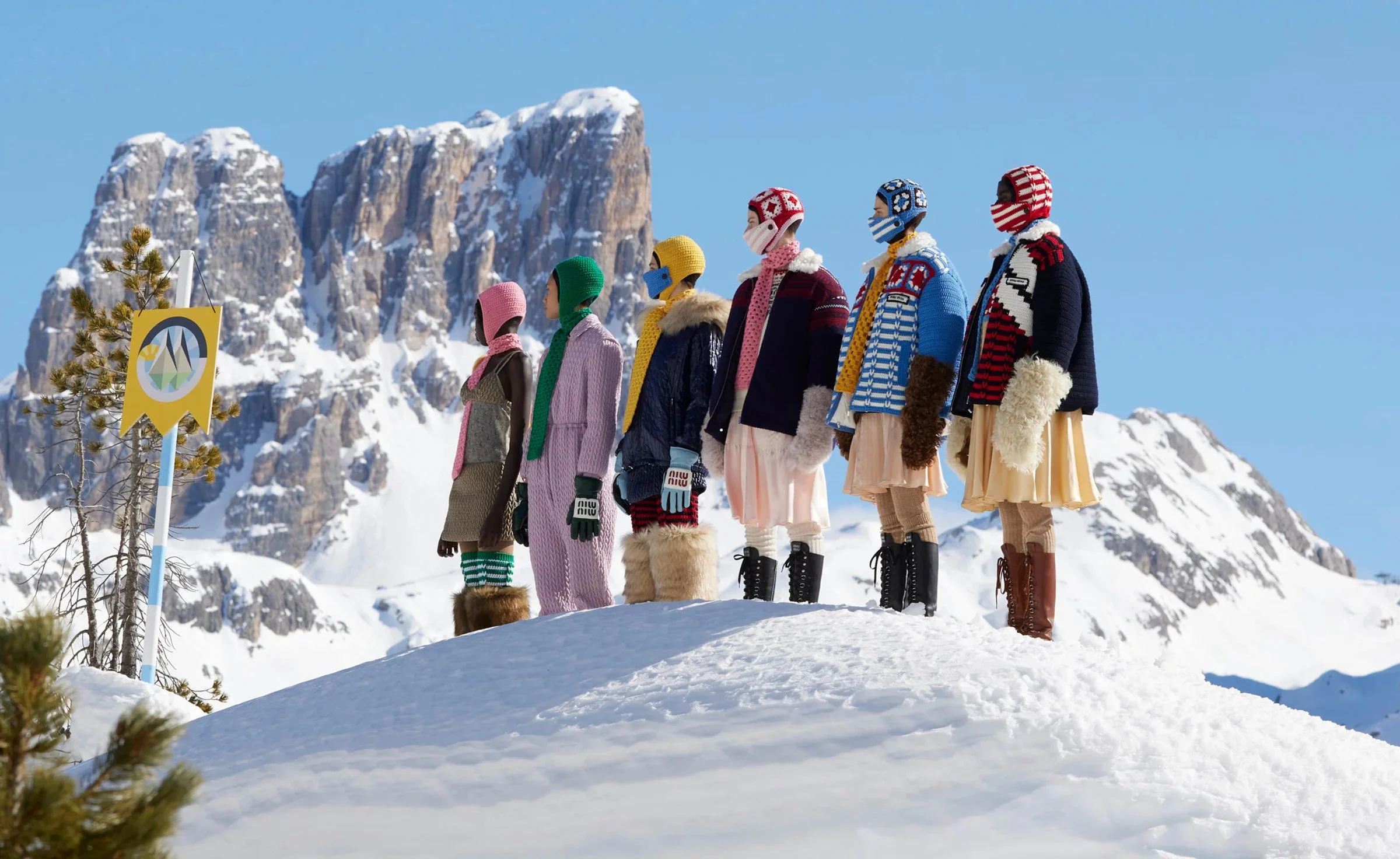
Miu Miu Fall/Winter 2021 Show. Photo: Miu Miu
Yet, skiing and fashion share more than wealth signaling. As Eileen Gu, freestyle skier, puts it: ““People always think that fashion and skiing are these two completely disparate entities … when in reality, the core aspects are actually very similar. Both are rooted in a sense of self-expression and creativity. Both require a lot of confidence, being able to perform under pressure, and being able to be yourself unapologetically. And I think that those qualities really do carry over.”
From Slim Aarons’ post-WWII alpine photography to today’s celebrity social media posts, the slopes have always been a backdrop for culture, creativity, and luxury. And with events like the 2026 Milan Winter Olympics approaching, it seems the relationship between skiing and style is only getting more visible—and more glamorous.