Dressing the Frame: Why Film Costume Is No Longer a Supporting Role
In many ways, this transformation mirrors the narrative of Frankenstein itself: just as Victor Frankenstein attempts to animate lifeless matter, contemporary cinema has revived costume design as a visible and influential creative force.
Dressing the Frame: Why Film Costume Is No Longer a Supporting Role
In a recent interview at the Business of Fashion Voices Summit in 2025, filmmaker Luca Guadagnino suggested that costume designers “tend to think in terms of the garment,” while fashion designers think “in terms of the body who wears them.” The remark has since prompted much debate in fashion media, yet recent cinema suggests otherwise. Increasingly, the garment itself has emerged as a central artistic force within the cinematic image. Costume design now shapes the emotional tone and visual language of a film as powerfully as cinematography, dialogue, or set design.
In the recent productions of Frankenstein and Wuthering Heights, Kate Hawley and Jacqueline Durran’s elaborate costumes move beyond the role of decorative period dress. Acting as symbolic devices, these garments are essential in shaping character, mood, and atmosphere within the cinematic frame. In both instances, film costume operates as a form of visual authorship, enhancing and contributing to the film’s tone as significantly as lighting or production design. This shift raises a broader question: if museums increasingly recognise fashion as a form of artistic expression, should certain cinematic costumes also be preserved and exhibited as works of art in their own right?
For much of twentieth century cinema, costume design was treated primarily as a technical discipline, tasked with maintaining historical accuracy and visual continuity across scenes. Designers were rarely recognised as key contributors to a film’s visual identity. Their work remained largely functional rather than authorial, an element of production design that operated in the background of critical discussion.
In recent years, this perception has shifted, as demonstrated by the attention surrounding films such as Barbie and Wicked. In both cases, costume design became a focal point of public fascination and debate. The iconic pink looks created by Jacqueline Durran for Margot Robbie, alongside the embroidered, voluminous gowns designed by Paul Tazewell for Ariana Grande’s Glinda, sparked widespread discussion across fashion media and digital platforms. Such attention signals a broader transition: costume designers are now recognised as creative architects of cinematic worlds.
Institutional recognition has further reinforced this shift. Major institutions such as the Victoria and Albert Museum and the Academy Museum of Motion Pictures now present costume as an essential component of cinematic world-building. More recently, the exhibition Frankenstein: Crafting a Tale Eternal, presented at the Old Selfridges Hotel in London, displayed Kate Hawley’s designs alongside jewellery from Tiffany & Co., positioning these garments as objects of artistic significance, works to be engaged with, analysed, and appreciated as art forms.
Seen within this context, costume can no longer be understood solely as decorative support within cinema. Instead, it has emerged as a central artistic discipline. In many ways, this transformation mirrors the narrative of Frankenstein itself: just as Victor Frankenstein attempts to animate lifeless matter, contemporary cinema has revived costume design as a visible and influential creative force.
Kate Hawley’s Creations for Frankenstein
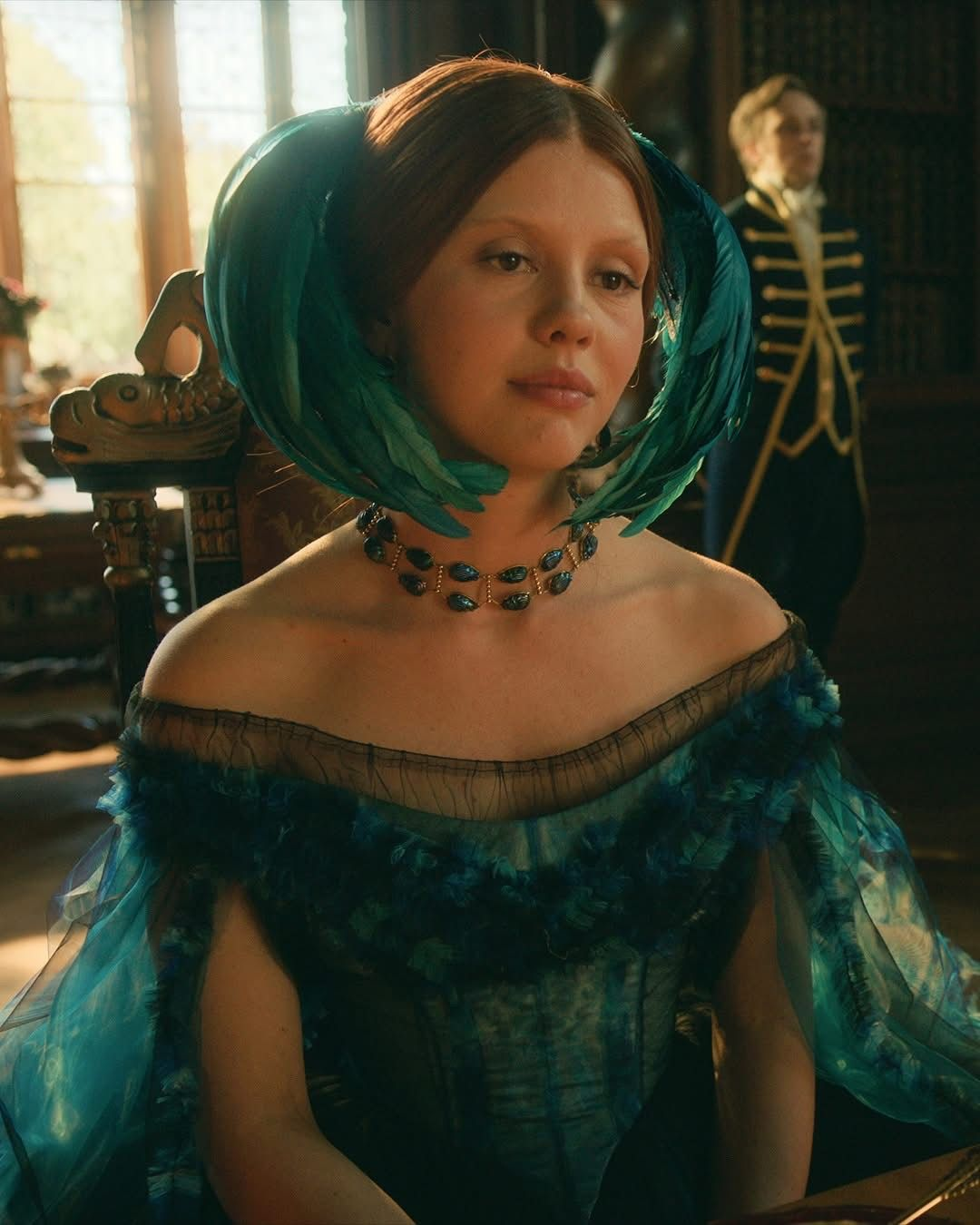
Elizabeth’s cerulean blue gown, worn during her first meeting with Viktor Frankenstein, remains one of the most discussed looks from the film. Kate Hawley, known for her collaborations with Guillermo del Toro on Crimson Peak and The Shape of Water, approaches costume as an integral part of a film’s visual architecture, drawing on references that span Romantic painting, music, and subculture.
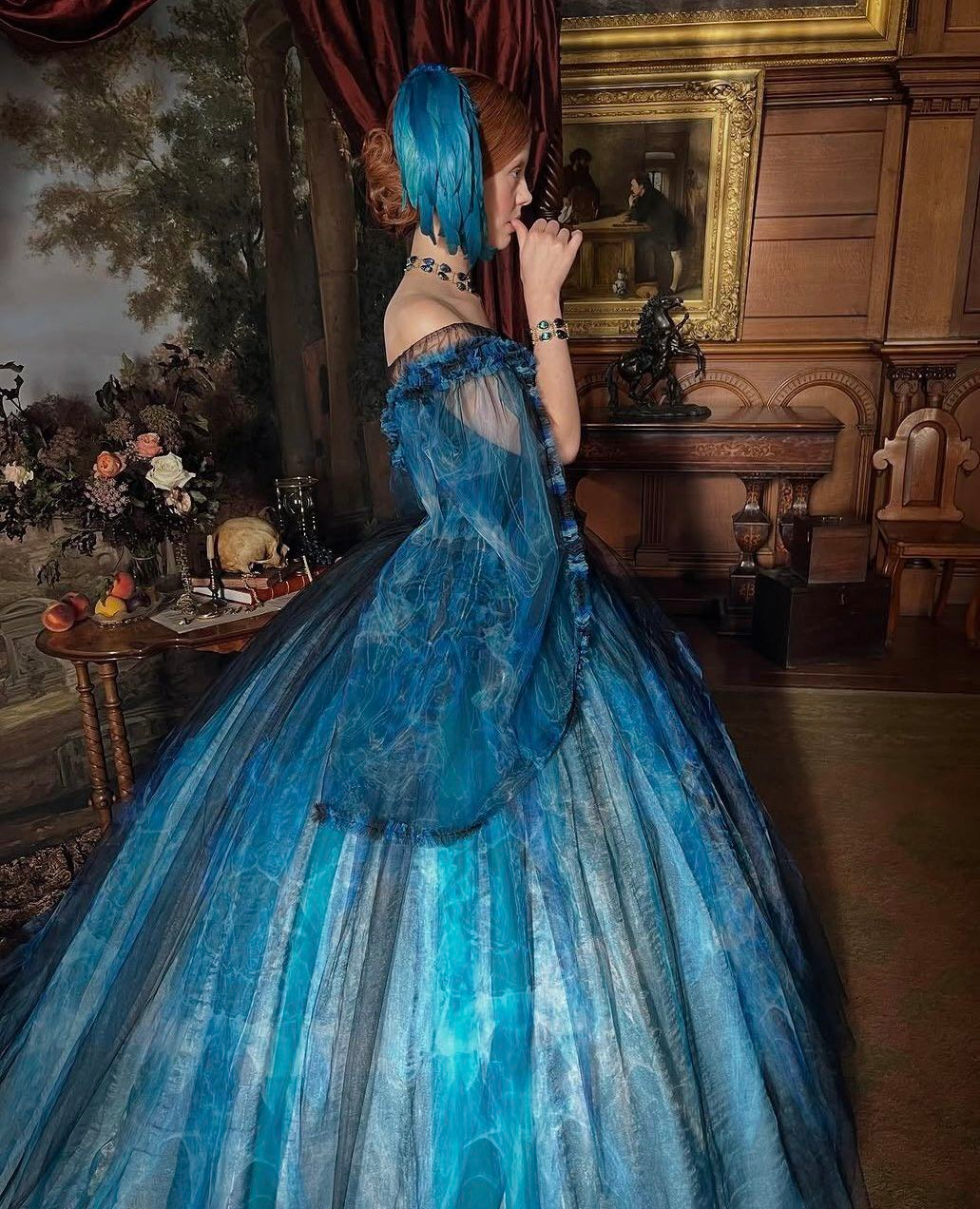
Constructed with a dramatically expanded crinoline and a tightly structured bodice, Elizabeth’s gown radiates outward, its layers of translucent tulle producing subtle chromatic shifts that recall the iridescence of beetle wings, an intentional reference to her fascination with entomology. Hawley has described looking at blood cells, X-rays, and fractal imagery, allowing anatomical references to permeate across the garment. A feathered headpiece curves around Elizabeth’s head like wings and a beetle-inspired necklace, referencing the designs of Louis Comfort Tiffany, anchors the costume within a symbolic language that connects the character to both nature and mutation. In turn, Elizabeth’s gown becomes a visual translation of the film’s underlying themes, biology, transformation, and interiority.
Jacqueline Durran’s Creations for Wuthering Heights
If Hawley’s creations for Frankenstein emphasise anatomical form, Durran’s costumes for Wuthering Heights pursue a vastly different visual strategy. Durran, whose work spans Atonement, Anna Karenina, and Little Women, has consistently maintained emotional expression over historical reconstruction.
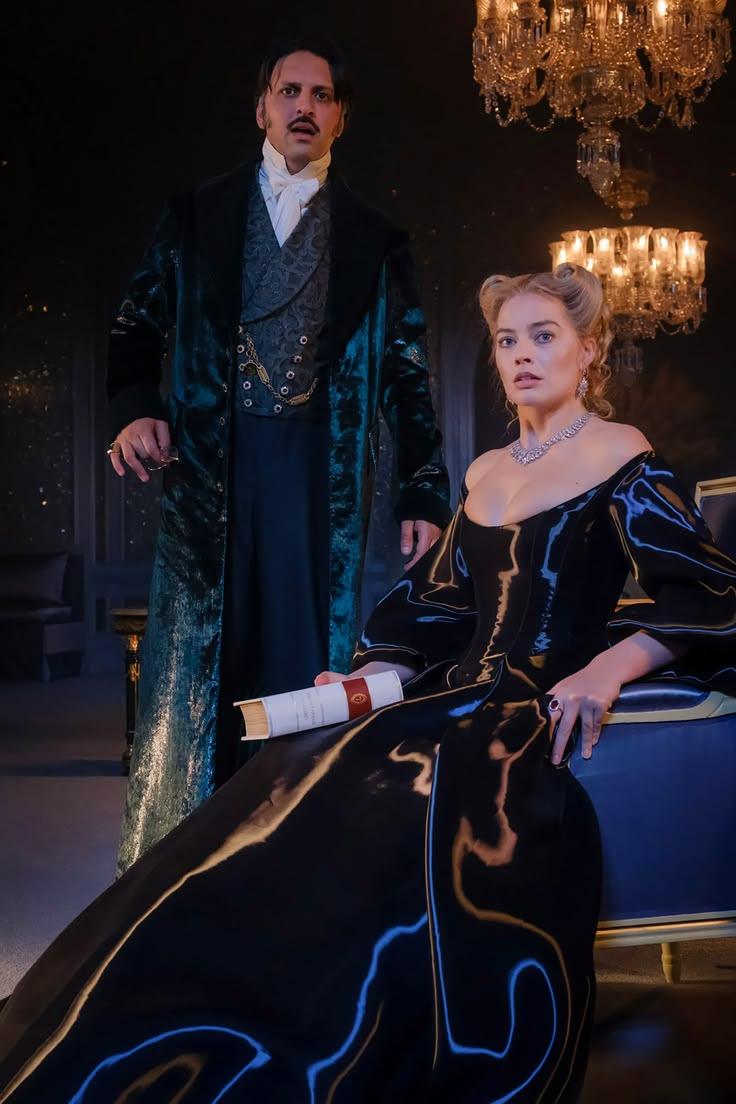
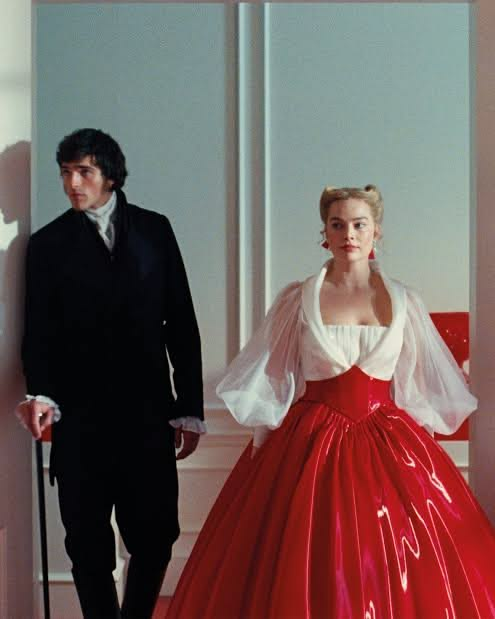
In Emerald Fennell’s adaptation, costume becomes a vehicle for psychological and narrative distortion. Cathy’s wardrobe evolves as she moves between environments, reflecting her internal instability and social displacement. Early looks draw on a darker, somber palette, positioning her in contrast to the artificial refinement of the Linton household. As she enters this world, her clothing becomes exaggerated: puffed sleeves, synthetic fabrics, and gharrish accessories disrupt the expectations of period accuracy.
Durran expresses that PVC and cellophane signal feelings of cold and restrictiveness, mirroring Cathy’s discomfort within her new position within society. Rather than aiming for historical accuracy, the costumes amplify emotional and psychological truth. The goal was not to recreate the nineteenth century but to construct a visual language capable of expressing obsession, mania, and dislocation.
A striking parallel emerges in the most discussed wedding gowns in Frankenstein and Wuthering Heights, revealing how costume can function as a narrative metaphor.
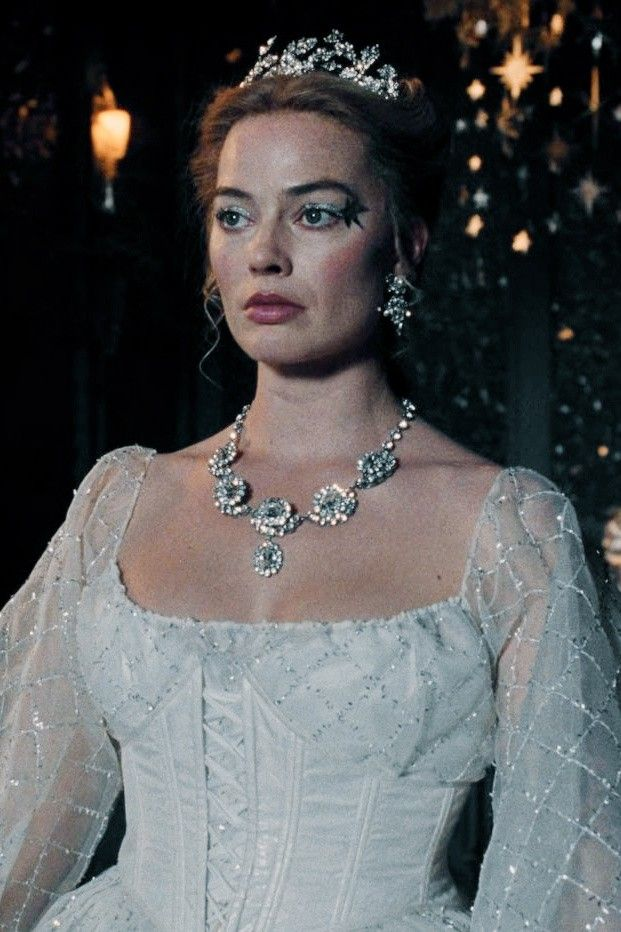
Elizabeth’s bridal gown in Frankenstein appears reminiscent of an “anatomical” dress. Drawing on historical Swiss ribbon bodices, the corset exposes boning arranged to resemble a ribcage, while the lacing traces a spine-like structure down the back. Translucent organza externalise the interior construction of the garment, creating an effect similar to an X-ray. As Hawley describes, the dress was built “from the inside out,” revealing itself as a piece of anatomy when stained with blood. Silk ribbons wrapping the sleeves evoke surgical bandages, visually aligning Elizabeth with the Creature rather than her soon to be husband. Jewellery, including a red crucifix designed in collaboration with Tiffany & Co, punctuates the gown like a wound, foreshadowing her fate.
In Wuthering Heights, Cathy’s gown takes an opposing approach. On her first evening as a newly married woman, she appears almost “gift-wrapped,” enveloped in a stiff, iridescent synthetic material recalling cellophane. Rather than drawing on the clover-like silhouettes of Charles James, the gown is defined by exaggerated bows and glossy surfaces, transforming Cathy into an object of display. Jacqueline Durran’s choice of material was to represent Cathy as packaged and presented, less a bride than a possession.
Seen together, these gowns articulate two distinct strategies. Hawley exposes the interior body, transforming dress into anatomy, while Durran encases the body within a surface of social performance. In both cases, the wedding gown becomes a site of narrative meaning rather than ceremonial decoration.
In both films, costume moves beyond clothing that adorns the body or situates a narrative in time; it operates as a form of visual language. As Roland Barthes argues in The Fashion System, clothing functions as a system of signs. In cinema, these signs become narrative tools.
Elizabeth’s cerulean gown communicates ritual, a fascination with otherworldly beings and transformation, while Cathy’s wardrobe articulates emotional volatility and social displacement. Costume becomes expressive, shaping how narrative is perceived rather than simply supporting it.
The growing artistic ambition of costume design raises an institutional question. If museums increasingly recognise fashion as art, as seen in exhibitions at the Costume Institute and the Victoria and Albert Museum, should cinematic costume be afforded similar status? Contemporary film costume has moved far beyond its role as a supporting element of production. Garments now function as key components of cinematic storytelling.
The gowns in Frankenstein and Wuthering Heights demonstrate how costume can operate simultaneously as clothing, design object, and narrative device. When costume begins to operate simultaneously as architecture, sculpture, and narrative, it becomes difficult to argue that it belongs solely to the screen. Some of cinema’s most elaborate garments ultimately deserve the same cultural afterlife as the couture now preserved within museum collections.