“I was always looking for clothes that didn’t exist. That was the problem—and eventually, I suppose, the beginning of Atelier Carlene.”
From Manila to Marylebone: A House Rewriting Couture's Geography
Couture has long been legally and institutionally bound to Europe—protected by government trademark law, fed by dedicated academic pipelines, upheld by a closed network of trade alliances. But the center of gravity is shifting. Designers from outside that system are no longer working to be let in; they're integrating their own regional heritages and claiming space on the official schedules themselves. The Philippines, in particular, is in the middle of a quiet renaissance—its craftsmanship increasingly visible on the world's most elite sartorial stages.
Carlene Zervoulakos didn't learn fashion in a classroom first. She learned it in fabric stores, long before she knew what to do with any of it—but what she did know, even then, was what she didn't want: nothing made because it felt correct or commercially safe, nothing without some detail that genuinely excited her. That instinct became Atelier Carlene, founded in Manila in 2019. Couture, to her, was never about expense or spectacle—it was intention: the relationship between designer, maker, material, and the woman who'll eventually wear the piece, refined again and again until every decision earns its place. Two years ago, she carried that philosophy to London alone, without a fixed plan, only the sense that she needed room to become the designer she was reaching toward. This month, for the first time, it’s arriving with her.
Before we talk about Atelier Carlene, tell us who you are and the path that led you here. What shaped Carlene before couture became the thing you'd build a life around?
I was always looking for clothes that didn’t exist. That was the problem—and eventually, I suppose, the beginning of Atelier Carlene.
Even as a little girl, I already wanted to be a designer. I was drawn to fashion through the smallest things: the way a colour changed a mood, how a silhouette made someone carry herself differently or how an unexpected texture could completely transform a piece. I loved going to fabric stores long before I knew how to turn any of those fabrics into clothes. I would simply look, touch and imagine.
I founded Atelier Carlene in Manila in 2019, before I fully understood everything building a label would require. What began through instinct gradually developed into a much clearer design language. I eventually came to London to study fashion and take that instinct more seriously. Still, much of my education came from building Atelier Carlene itself: working closely with clients and makers, making mistakes, refining my eye and learning through the clothes.
The brand has always felt like a natural extension of me. Today, it supports an entire team and reaches women far beyond what I imagined when I started. That has made me much more conscious of what we create, how we create it and the people responsible for bringing each idea to life.
Couture has historically been defined through European maisons—tradition, technique, a certain idea of legitimacy. As that geography begins to expand, where does a Manila-based house like Atelier Carlene fit into the conversation, and what gives a piece of work the right to carry the word "couture"?
Haute couture has a specific institutional meaning in France. Atelier Carlene operates outside that system, but the wider practice of couture—the intimacy, handwork, technical knowledge and devotion given to an individual garment—can exist far beyond Paris.
For me, couture is not simply about making something expensive or elaborate. It is about intention. It is the relationship between the designer, the maker, the material and the woman who will wear it. It is a piece being cut, fitted, embroidered and continually refined until every decision feels considered.
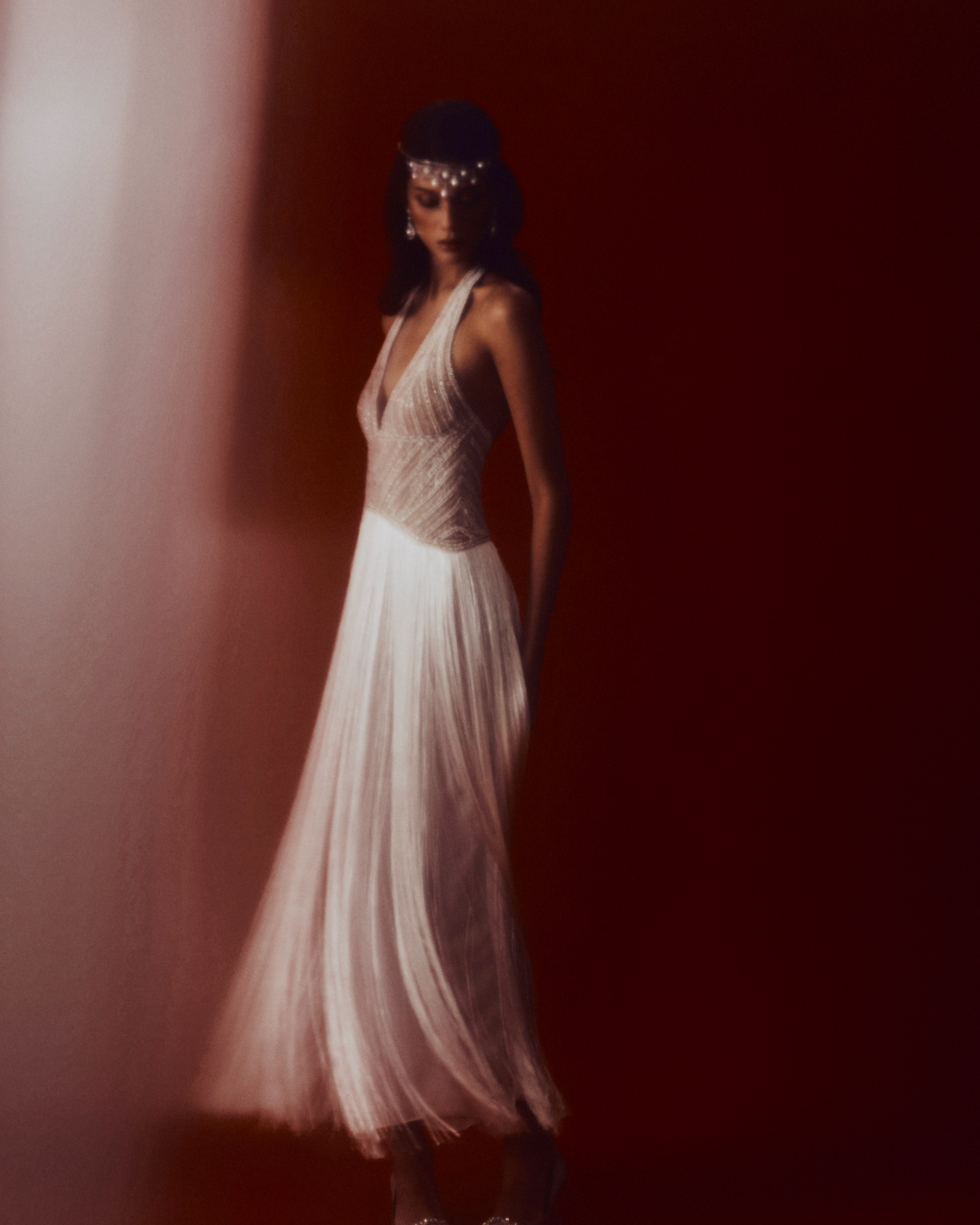
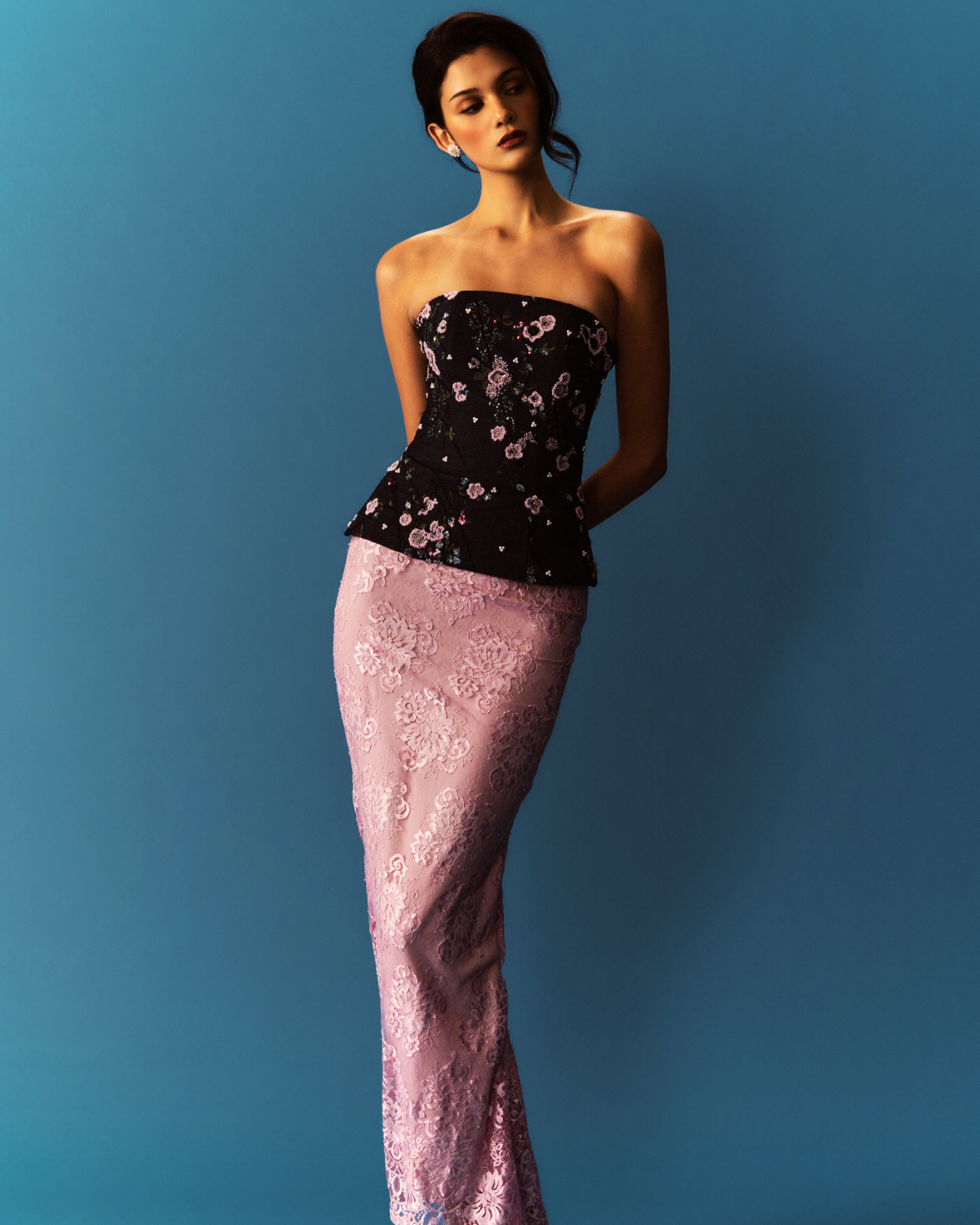
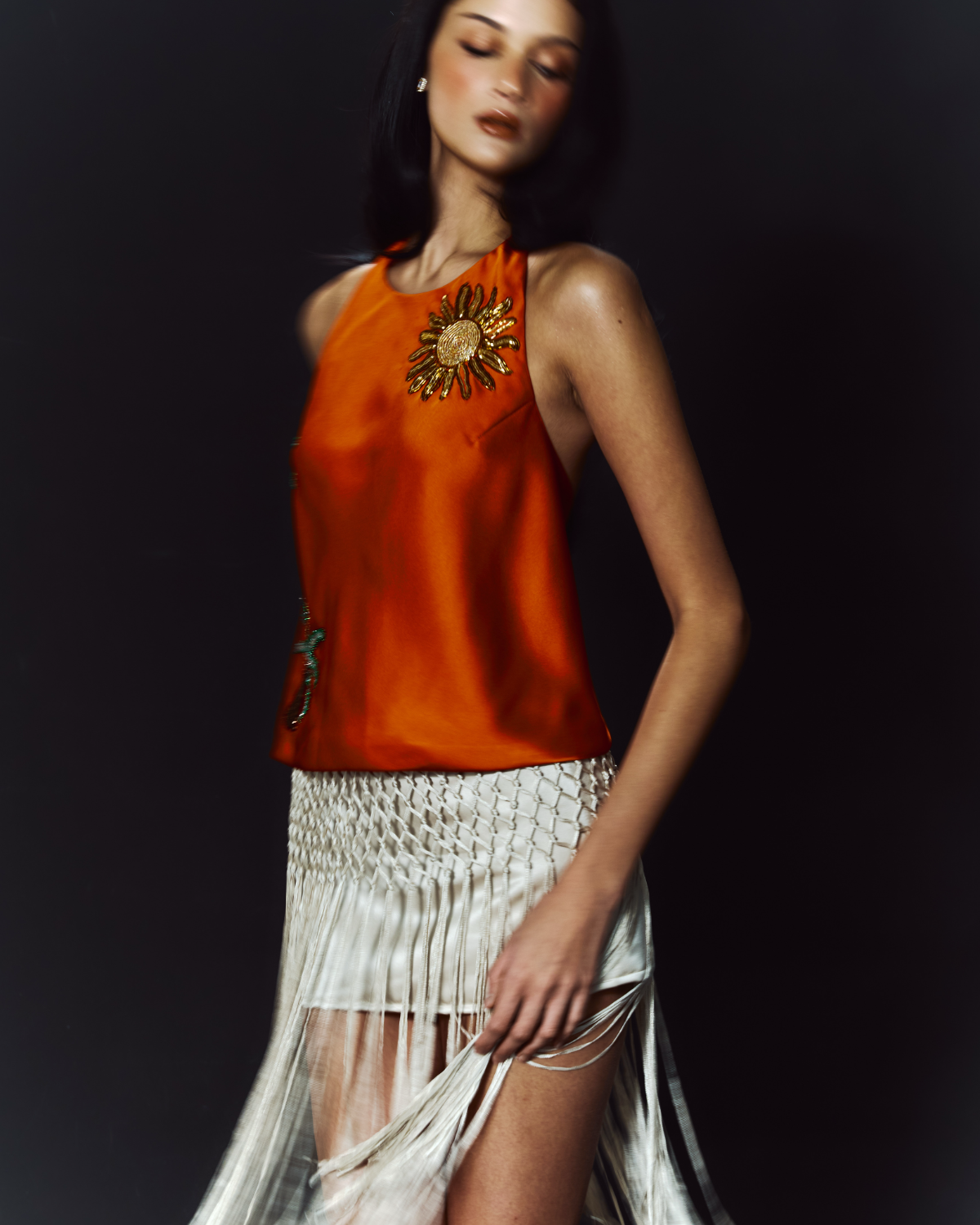
Manila belongs in that conversation because Filipino makers possess extraordinary skill. At Atelier Carlene, that technical foundation is brought into a contemporary language through colour, sensuality, experimentation and play.
I don’t believe we need to imitate a European standard to prove that our work has value. We can respect the history of couture while contributing something shaped by our own people, place and creative identity.
What is it about making clothes in the Philippines—the craft traditions, the handwork, the way of working—that's become non-negotiable in your practice?
Everything at Atelier Carlene is designed and made in Manila. That isn’t simply a production detail; it is one of the greatest strengths of the brand.
The Philippines has an incredible culture of making. We have remarkable makers specialising in pattern cutting, construction, embroidery, beadwork and finishing. In our atelier, one garment can pass through several makers before it is complete. Every person brings a different kind of expertise, and the clothes would not exist at this level without them.
As Atelier Carlene grows, I want the opportunities around that talent to grow too. That means keeping our production in Manila, developing a strong in-house team and giving our makers the time, support and recognition their work deserves.
The skill is already present in how our clothes are cut, constructed, embroidered and finished. What matters to me is that as Atelier Carlene evolves, the knowledge and expertise of our makers remain at the centre of how we create.
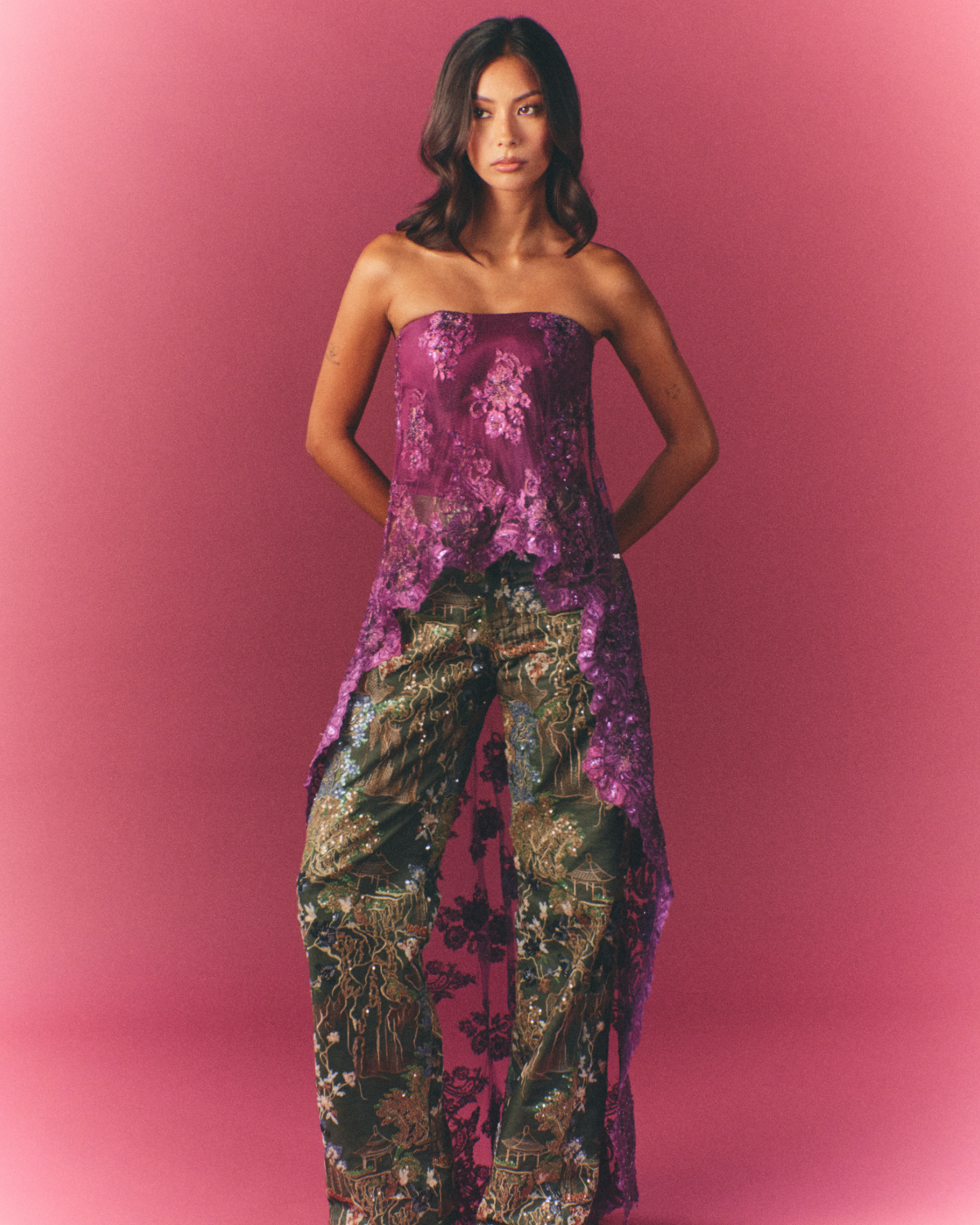
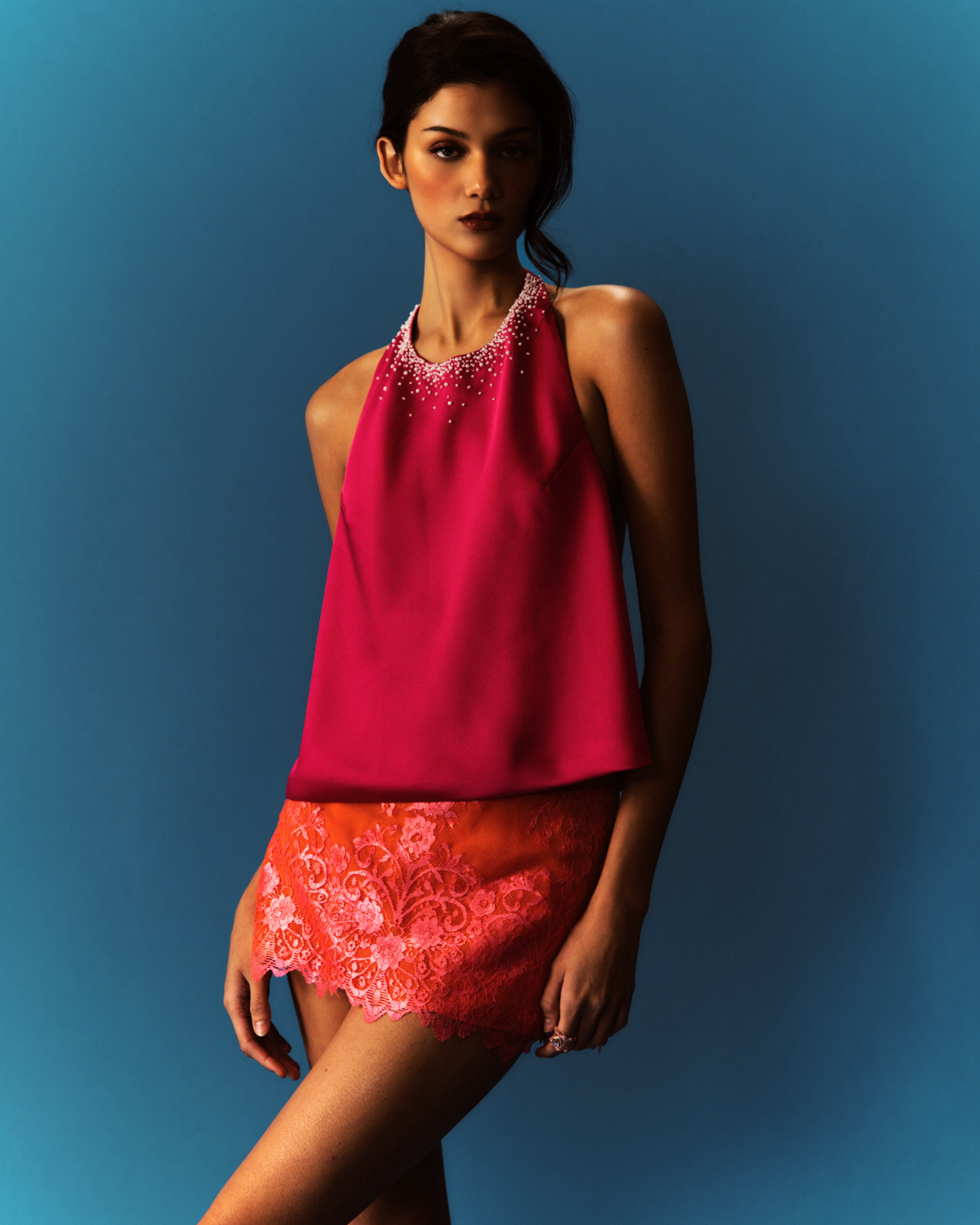
Atelier Carlene approaches couture with so much color, sensuality, and play. Why does craftsmanship still need to feel joyful to you?
Colour and texture have always been emotional for me. I design very intuitively, and rarely does an entire collection come from one fixed idea. It is usually a process of building: discovering a fabric, revisiting a silhouette, changing a proportion or finding a new way to place embroidery until something suddenly feels right.
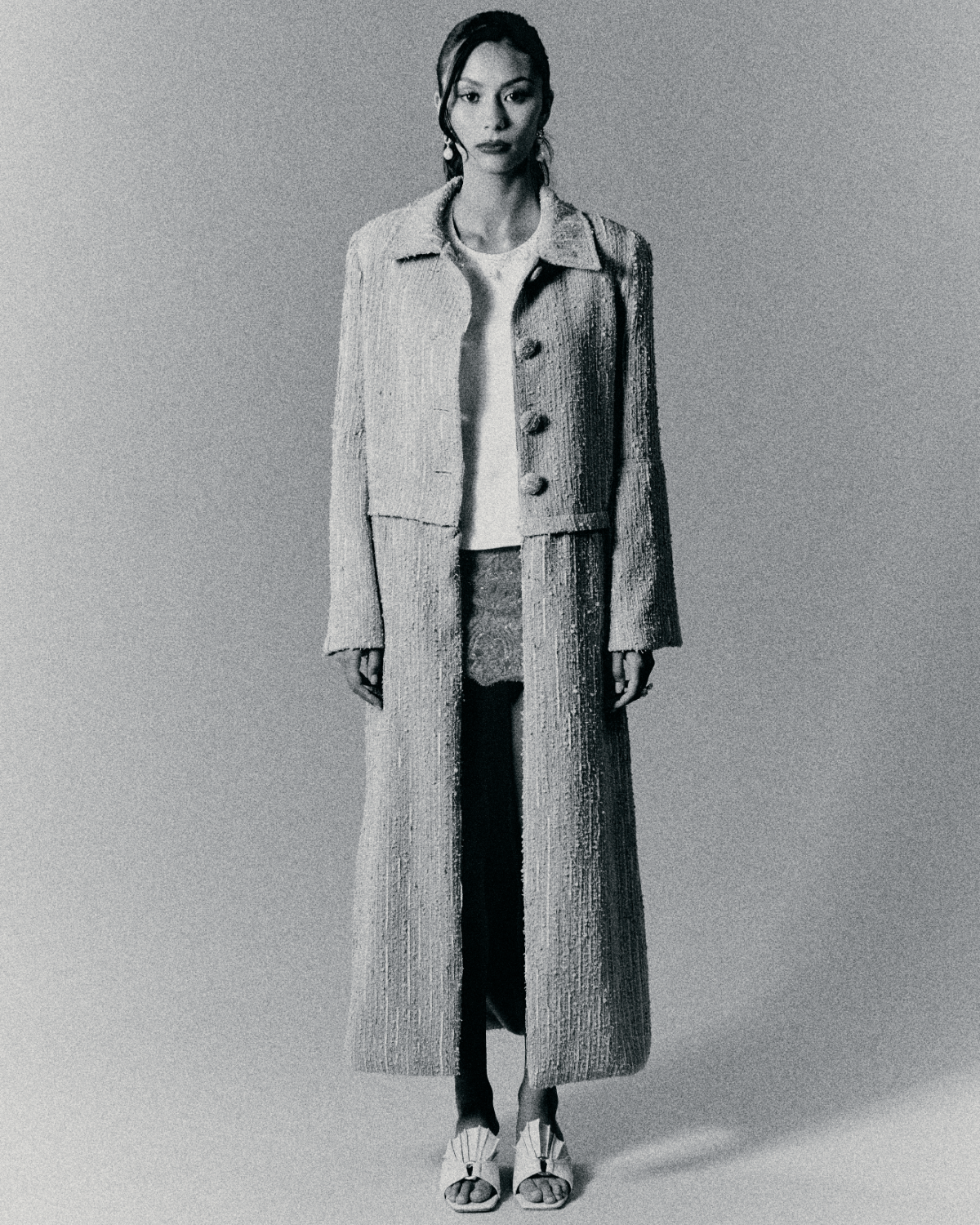
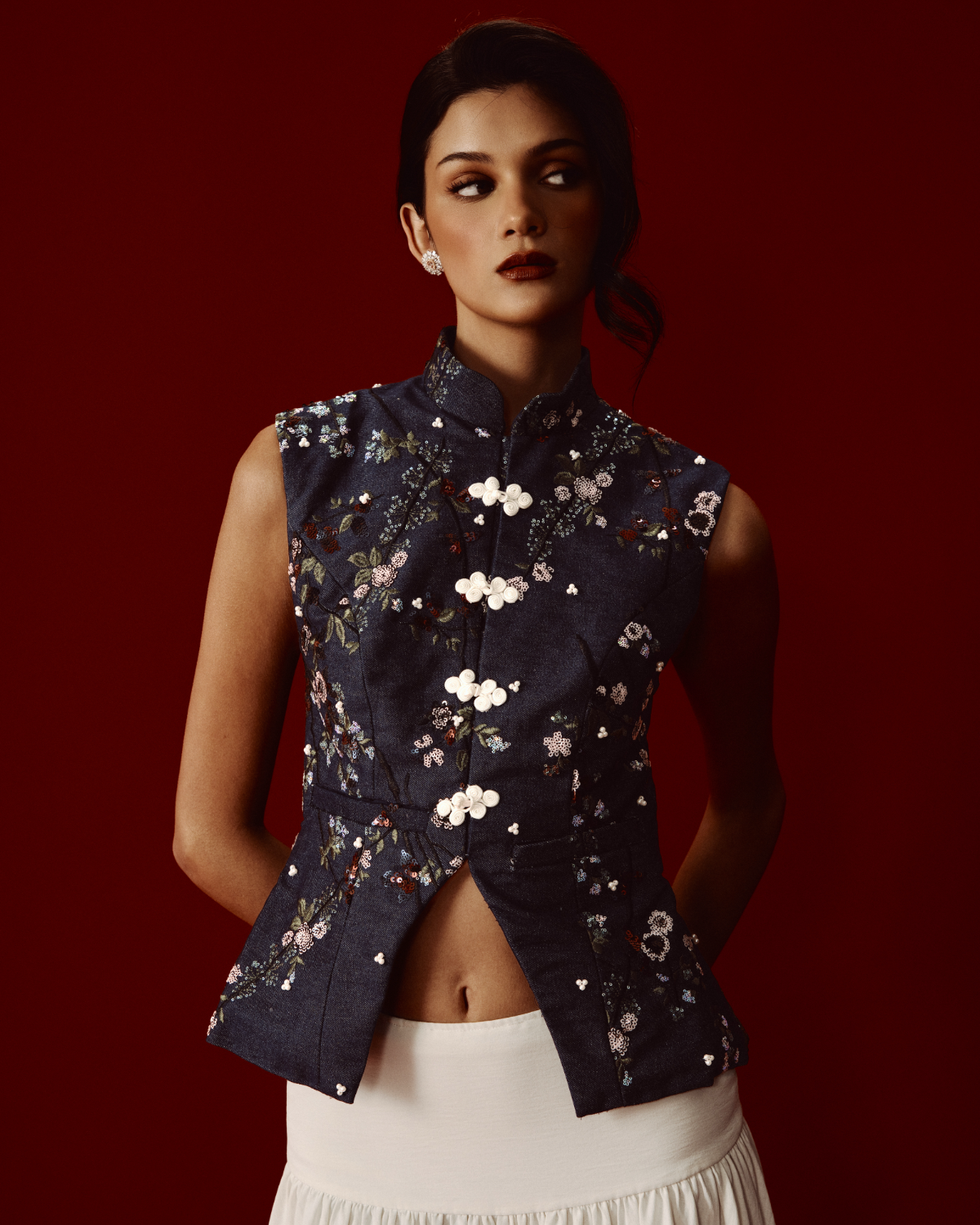
I love taking something familiar, like denim, and treating it with the same imagination and attention as an evening piece—adding handwork, changing the proportion or making it feel unexpectedly precious. I never want to create something simply because it feels correct or commercially safe. There has to be an element that genuinely excites me.
The women I design for genuinely enjoy clothes. They are curious, instinctive and don’t treat dressing like a rulebook. I take the process very seriously, but seriousness does not have to look severe. Play is not the absence of discipline. It is what becomes possible when you understand the technique well enough—and trust your voice enough—to take it somewhere more personal.
In today's market, brands have to answer to a customer who's global, online, and comparison-shopping in real time. How much does that customer shape the work, versus how much do you shape her?
I listen closely to our clients, but I also know that my role as a designer is to lead.
Our clients teach me how the clothes live beyond the sketch: how a piece makes them feel, what they repeatedly reach for and what becomes part of their lives. Working so closely with women has sharpened my understanding of fit, confidence and the emotional relationship someone can have with a garment.
At the same time, they come to Atelier Carlene because they trust us to show them something they have not already seen. My role is not simply to respond to what is popular. It is to propose a new proportion, an unexpected textile or a more playful way of dressing—and then make it feel completely natural on the woman.
The relationship works because there is trust on both sides. Our clients give me insight into how the work is experienced, but they also give me the freedom to lead creatively. I listen carefully, refine constantly and remain decisive about what belongs in the Atelier Carlene world.
Every house eventually faces the question of what "growth" costs the thing that made it distinct. Where's that line for you right now?
Our in-house production team is one of Atelier Carlene’s greatest strengths. The people making the clothes are close to the design process, which allows us to continually refine the work and protect the standard of every piece.
We have no interest in becoming a conventional mass-production business. Even our ready-to-wear carries a level of handwork and attention that requires time. A garment may move through pattern cutting and construction, then to embroidery or beadwork, before returning for finishing and quality control. It genuinely takes a village, and these pieces cannot be rushed.
For me, growth means strengthening the structure around that way of working. It means creating better systems, responsibly expanding our team and understanding which signatures can be produced more consistently without losing what made them special.
I want us to reach more people, but I want every stage of that growth to protect the reason they were drawn to us in the first place. Becoming bigger means very little if the clothes no longer feel considered, personal or unmistakably Atelier Carlene.
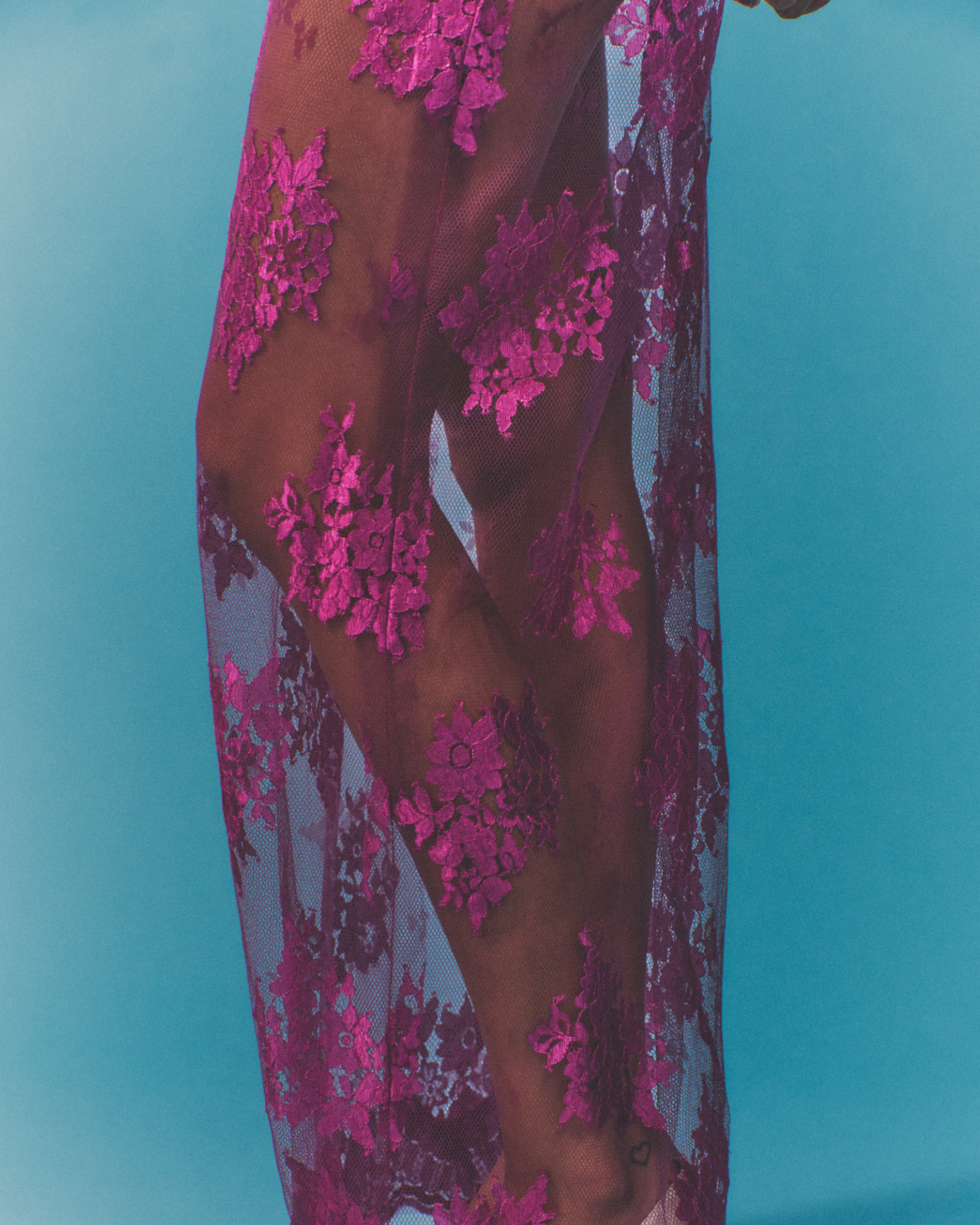
Why does this moment feel like the right one to bring Atelier Carlene to London—and what do you want people to feel when they encounter the clothes here?
Two years ago, I came to London alone. I didn’t have a perfect game plan; I only knew I needed to step outside what was familiar and give myself room to understand the kind of designer I wanted to become.
I ended up staying longer than I expected, and that time made me more observant, independent and confident in my instincts. London now feels like a second home to me. I love its fashion community because people genuinely respond to individuality, but being away also made me understand what I wanted to protect from Manila and what made Atelier Carlene distinctly ours.
Bringing the brand here feels very personal. It is a little bit of Manila coming to London, but there is also a little bit of London that I carry back into my work in Manila.
I want people to feel that they are discovering something new: clothes with personality and serious skill behind them. I want them to ask where the pieces were made and become curious about the creativity already coming from the Philippines. If Atelier Carlene can contribute to a broader understanding of what Filipino fashion is today, that would mean so much to me.
Take us to a specific moment in your design career where you fell back in love with the craft itself, away from the business of it. What was it, and how have you carried that into your career today?
It wasn’t one dramatic moment or a particular garment. It was the period when I finally gave myself the time and freedom to enjoy being creative again.
I had stepped back from designing and didn’t know exactly what the next chapter of Atelier Carlene—or of my life—would look like. For so long, every idea had been attached to an order, deadline or collection. Suddenly, I had space to conceptualise without needing an immediate outcome. Some days it was as simple as sitting in a park with my sketchbook, observing how people dressed or allowing an idea to develop slowly instead of forcing it into a product.
Having that unstructured time made me feel inspired again. I could enjoy clothes, images, places and everyday life without constantly asking how they could serve the business.
That period taught me that rest and uncertainty are not the opposite of progress. Sometimes they are where your clearest ideas begin. I returned to Atelier Carlene more confident and connected to the work because I had allowed myself to be a creative person again, not only a business owner.
Atelier Carlene carries your own name. What drove that decision, and how do you envision the future of the label alongside your own life?
Honestly, I didn’t overthink the name. The work was so personal from the beginning that calling it Atelier Carlene simply felt like the most natural and honest choice.
The brand began as an expression of my own taste, curiosity and understanding of clothes and femininity. The colours I love, the silhouettes I’m drawn to and the tension between sensuality, humour and technique all find their way into the clothes. Putting my name on it wasn’t meant to be a grand statement. It just felt true to where everything came from.
Now, the name represents much more than me. It carries the work of our makers and everyone helping me build this world. It also carries the trust of the women who have grown with us.
I want Atelier Carlene to develop a recognisable language while remaining as personal and curious as it was when I began. My perspective will naturally evolve, and I want the brand to evolve with me without losing what made it feel special in the first place.