
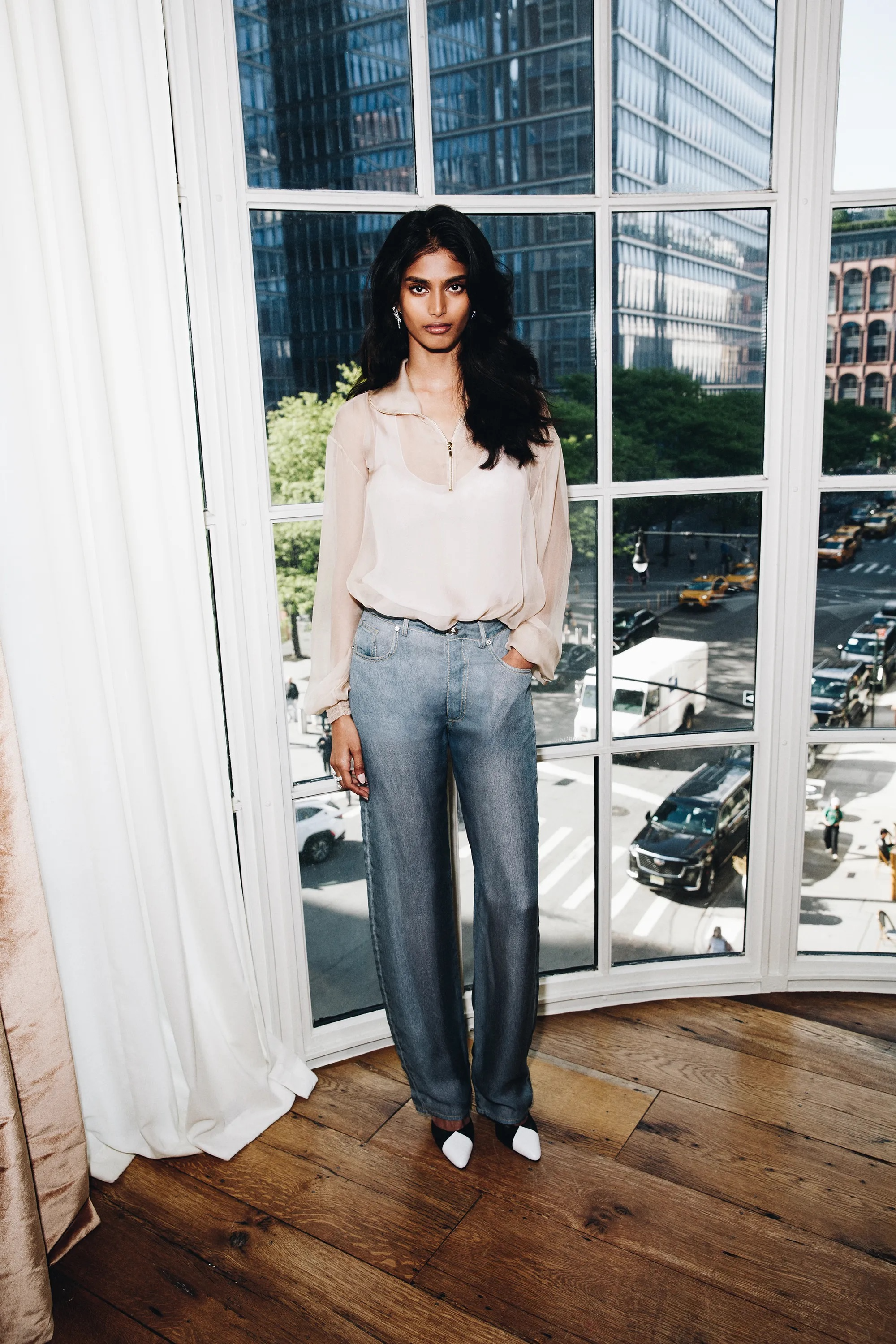
A sonnet only gets fourteen lines. A T-shirt only gets a front, a back, and two sleeves. And in May, I think we’re going to see just how much beauty can fit inside those limits. | Bhavitha Mandava in Chanel. Photo courtesy of Chanel via Vogue.
I'm Calling It: The Best Met Gala Is Yet To Come In 2027
The first person I thought of when I read the 2027 Met Gala theme was Bhavitha Mandava.
Let me set the scene. It was the first Monday in May, and I was curled up on my couch in my comfiest (and, I’d like to think, chicest) pajamas, sleepy time tea steeping in a beautiful ceramic mug, my D.S. & Durga Big Sur After Rain candle burning on the coffee table. Everything was perfectly arranged for the most sacred of annual rituals: judging the looks at the 2026 Met Gala.
Then Bhavitha walked up the steps, and I thought, rather uncharitably, that someone had forgotten to dress her.
She was wearing what looked like faded jeans and a sheer beige zip-up. On the Met steps. On fashion’s most scrutinized night of the year. “What the H*LL is she wearing???” was, word for word, my gut reaction. I was the first to criticize it, and I was in good company. The internet split into camps almost immediately, and across social media, the verdict from a lot of fans was that Chanel had done her dirty.
Then I read about it, and my entire viewpoint changed.
The jeans were not jeans. According to Chanel, the look was a haute couture reinterpretation of the outfit Bhavitha wore to open the house’s Métiers d’Art show in New York, a show staged inside a decommissioned subway station. Fitting, since she was scouted in a Brooklyn subway station while studying at NYU. The “denim” was reportedly silk muslin printed to look like denim, and the house said the ensemble took 250 hours of work in its ateliers. Bhavitha herself told British Vogue the idea was hers, shared with Chanel’s artistic director Matthieu Blazy.
Suddenly it was so beautiful. Something that looks completely ordinary at first glance turned out to be a poetic re-imagination of how a designer, modern technique, and fabric can come together to make art. That is exactly what makes fashion so interesting and dynamic to me. It has the power to shift, reimagine, and alter your view of the world, and even how you present yourself to it.
Within the week, I needed a pair of silk jeans. (I’m now the proud owner-in-waiting of a pair by the brand Mizawe.) And six months later, the Met itself has come around to Bhavitha vision. As CNN’s Leah Dolan put it, she was just 12 months ahead of her time.
So, What Is the Theme?
On Thursday, November 5, the Metropolitan Museum of Art’s Costume Institute announced its new spring 2027 exhibition, and with it the theme of the next Met Gala: “extraORDINARY: Fashion and the Poetics of the Everyday.”
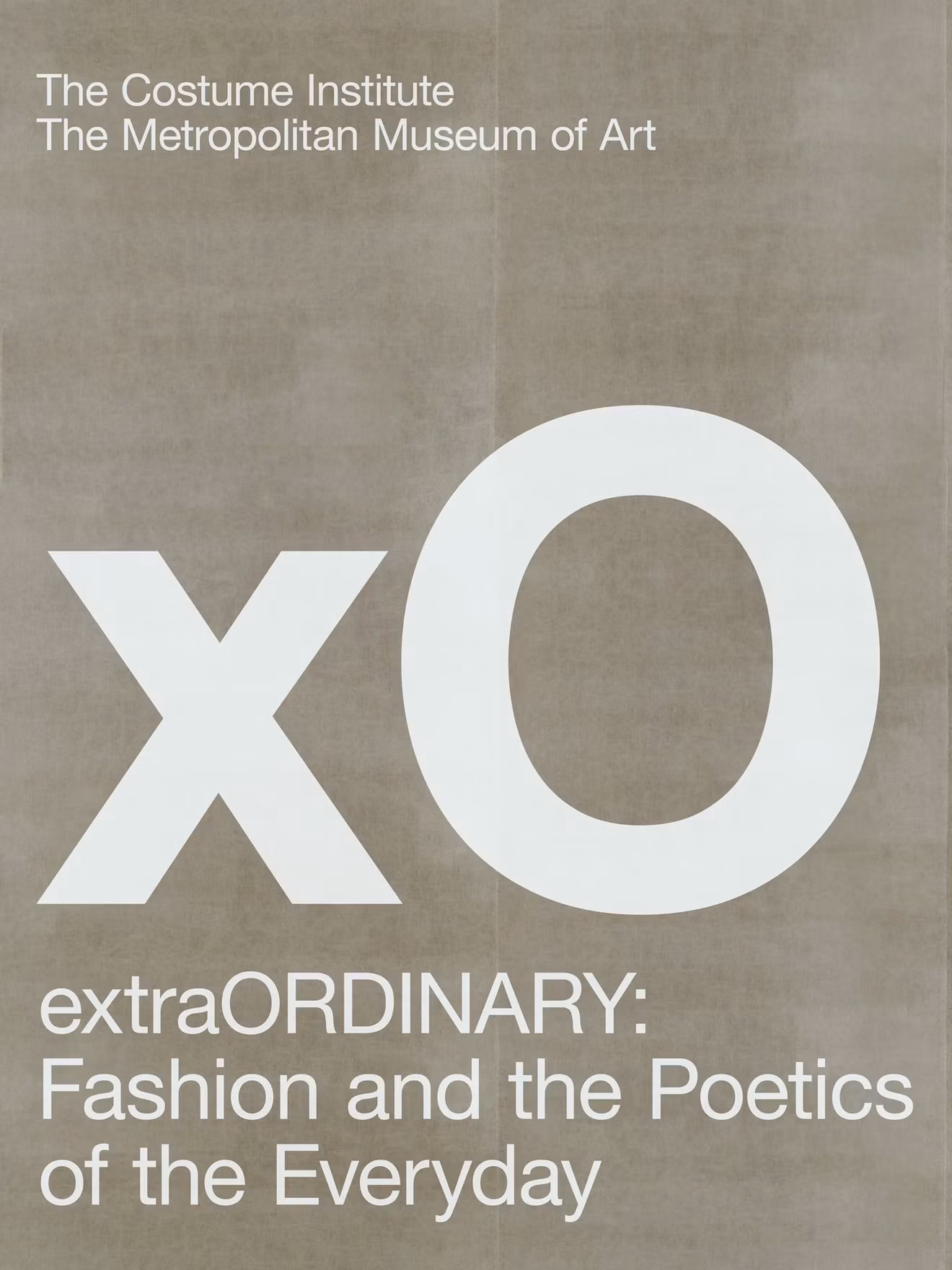
The Costume Institute’s “extraORDINARY: Fashion and the Poetics of the Everyday.” Courtesy of The Metropolitan Museum of Art, via Vogue
The concept is simple to say and wonderfully hard to execute. The show, curated by Andrew Bolton with Stephanie Kramer and Emily Mushaben, looks at how designers take the most familiar things we own and make them extraordinary. It comes at that idea from two directions. The first is the elevation of archetypal garments: the white T-shirt, the pair of jeans, the sweatshirt. The second is the transformation of humble, even disposable materials, like paper, plastic, and aluminum, into wearable art.
The planned checklist is a dream: a 1930s couture puffer by Charles James, pieces from Marc Jacobs grunge collection for Perry Ellis, the Calvin Klein jeans from Brooke Shields 1980 ad, Matthieu Blazy’s trompe l’oeil leather jeans for Bottega Veneta, a silverware-covered dress from Maison Margiela’s spring 2027 collection, and Hodakova’s spoon pieces. Bolton has described the show as a kind of sequel to 2026’s “Costume Art,” moving from the dressed body as art to how we actually live in our clothes, through habit, touch, and movement. He said he finds “something hopeful about discovering how much imagination the everyday can hold.” He even hopes exhibition visitors will show up in their own favorite tee, jeans, or hoodie.
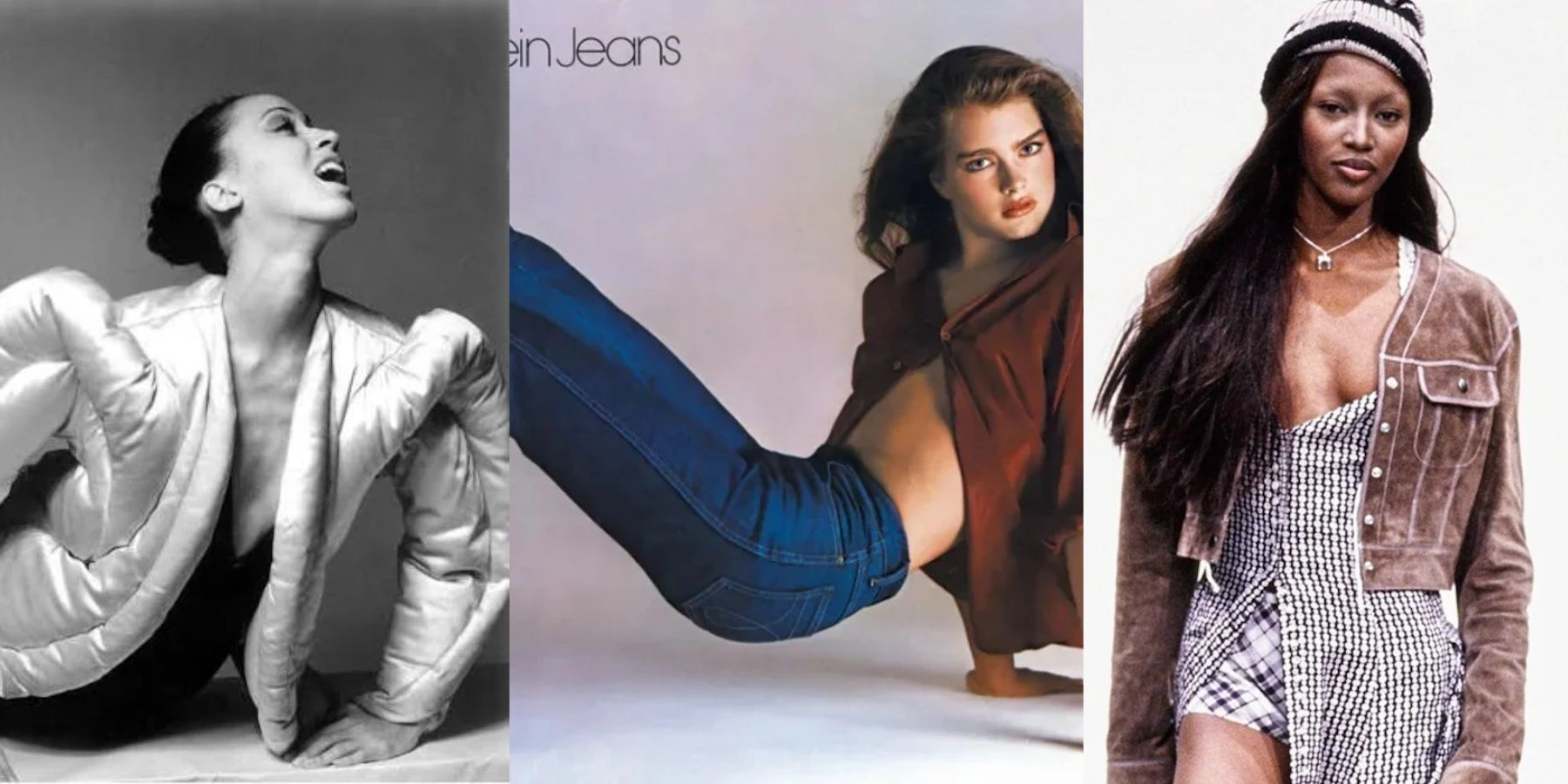
Charles James’s 1937 puffer; Brooke Shields for Calvin Klein Jeans (Richard Avedon, 1980); Naomi Campbell walking for Marc Jacobs grunge collection for Perry Ellis, Spring 1993
A Word For The Critics
The internet, as the internet does, had its verdict ready before the press release finished loading.
One Met Gala fan account on Instagram predicted it would be the worst Met Gala in history. Another user called it the lamest concept so far. The Wall Street Journal suggested the Met was
playing it safe. And then there was the phrase of the day, “recession indicator,” which went from comment sections all the way to a Hyperallergic headline calling the theme the biggest recession indicator yet, while Highsnobiety mused that it signaled a creative recession.
I have to ask, with love: did anyone read past the first line?
Nobody is being asked to show up to the Met in a Hanes three-pack. The theme is not “wear your jeans.” It is “show me what a pair of jeans can become.” Those are two very different approaches, and only one of them is boring and thoughtless. Some of the most celebrated pieces in fashion history began with this kind of exercise.
Come to think of it, the whole plan B thing is my favorite part. The Met had no backup and a few months to figure it out, and instead of throwing together some over-the-top fantasy theme, they handed designers a real challenge. I love that. It is so much easier to immediately criticize something than it is to actually consider it. I’d gently suggest that a reaction that took four seconds to form might be lacking a little of the very creativity it’s accusing the Met of abandoning.
Restriction Breeds Creativity
Here is my whole argument in one sentence: restriction generates creativity.
A sonnet has fourteen lines. That’s it. Fourteen lines and a rhyme scheme, and poets have been pouring the entire human heart into that tiny, rigid box for centuries. Nobody has ever looked at a sonnet and said, “How limiting. Where’s the rest of it?” The box is what makes it sing.
There is real science behind this, too. In 2016, Rider University psychologist Catrinel Haught-Tromp published a study she named the Green Eggs and Ham hypothesis, after the Dr. Seuss classic written using only 50 words. She asked undergraduates to write short greeting-card rhymes, some with no rules and some required to include specific words. The constrained rhymes came out more creative, and the effect carried over even after the rules were lifted. Her explanation is so simple it’s almost a style tip: constraints let you explore fewer options more deeply.
I learned this lesson the fun way. I went to Los Angeles for what was supposed to be a three-day trip, and it turned into two and a half weeks. I obviously hadn’t packed for that. Without buying a single new thing, what I thought would make four outfits, tops, turned into a plethora of variations I would never have tried at home with a full closet staring back at me. With nothing new to reach for, I had no choice but to actually look at what I had.
That is exactly what the Met just did to every designer in the world. It took away the ball gown crutch, the fantasy costume, the archival pull, and left them with the hardest brief in fashion: make me feel something about a T-shirt.
This theme drags craft back to center stage, where it belongs. When the garment is ordinary, the making is the spectacle.
For years, the Met Gala has felt like the total antithesis of how real people dress, a beautiful, untouchable spectacle that has almost nothing to say about the clothes we actually live in. This theme closes the gap, and humanizes the art form. It takes the pieces sitting in every one of our closets and asks the most talented people in the industry to show us what they could be. Whatever walks up those steps in May is going to trickle down, the way red carpets always do, into street style, into collections, into how we dress on a random Tuesday. I am hoping for an entire year of beautiful inspiration for ordinary, everyday dressing, and I think we’re going to get it.
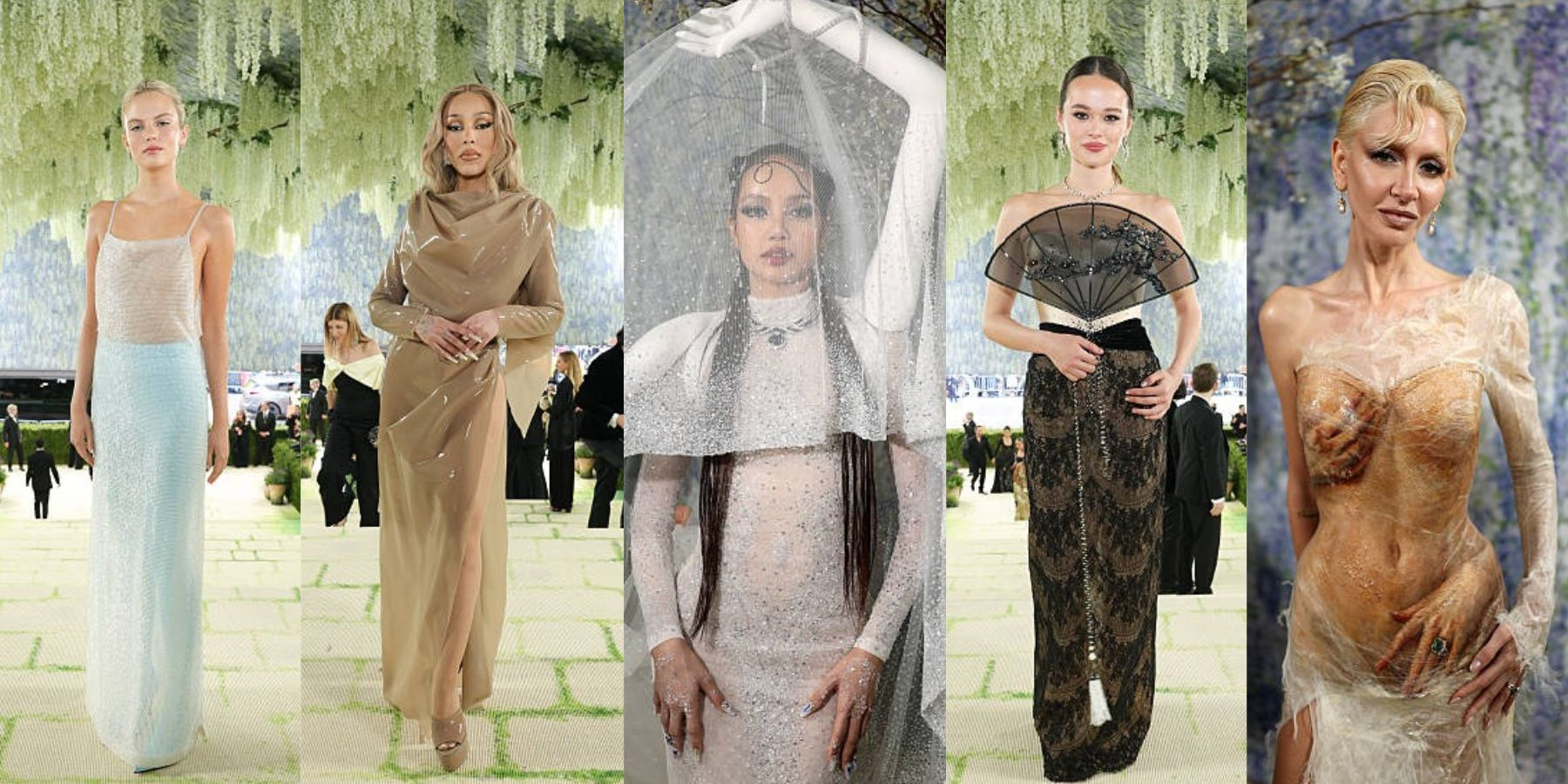
Isla Johnston, Doja Cat, Lisa, Grace Murdoch, and Sabine Getty at the 2026 Met Gala. Photos via Getty Images
So, Who Is This Gala Even For?
The Met Gala has become more of a sensation than a study of fashion and art. Lately the hype leading up to it (the moodboards, the predictions, people sharing their dream looks) has been more exciting than the carpet, and this theme is a tough sell on a phone screen. A pair of couture silk “jeans” just looks like jeans when you’re scrolling past at midnight, and most people aren’t going to stop and read about it the way I did with Bhavitha’s.
But I was that person scrolling past. I almost wrote her off completely, and the only reason I didn’t is because I got curious. That’s what this theme is betting on, and it’s a pretty good bet at that. You don’t need to know anything about fashion to recognize a white tee. Everyone owns one, which makes it so much easier to wonder what a designer actually did to it. And since nobody gets to hide behind a giant gown this year, designers are going to have to give us a reason to look closer. Restriction, doing its thing again.
One more thing: the Met Gala exists to fund a museum department. The whole night is a benefit for the Costume Institute, the only department at the Met that has to pay for itself, and last May’s gala raised a record $42 million for its exhibitions, acquisitions, and operations. So “sensation versus study” isn’t really a contradiction the Met stumbled into. The sensation has always been there to pay for the study. This theme just makes that relationship unusually visible, by bringing the study right onto the carpet.
So who is the Met Gala for? This year, I think it’s for those willing to look past the spectacle and get curious about where personal style meets design, art, and innovation.
The Verdict
Andrew Bolton has said that a pair of jeans or a sweatshirt can carry traces of a life: the habits, memories, and attachments that make a piece our own. When I read that, I thought of something in my closet I recently restyled: my favorite baseball tee from Leset. It’s about as classic and nostalgic as American dressing gets, but the other night I wore it with a silk skirt and heels, and suddenly it wasn’t a sideline shirt anymore. It was the statement of my whole night out. Nothing about the tee changed. Everything about how I saw it did.
That’s what I hope this Met Gala leaves us with. When you watch the looks come up those steps in May, ask yourself one question: how can I make an ordinary piece extraordinary in my own wardrobe? Then take a second look at the clothes you already own.
A sonnet only gets fourteen lines. A T-shirt only gets a front, a back, and two sleeves. And in May, I think we’re going to see just how much beauty can fit inside those limits. Call it a recession indicator if you want. I’m calling it the best Met Gala yet.