
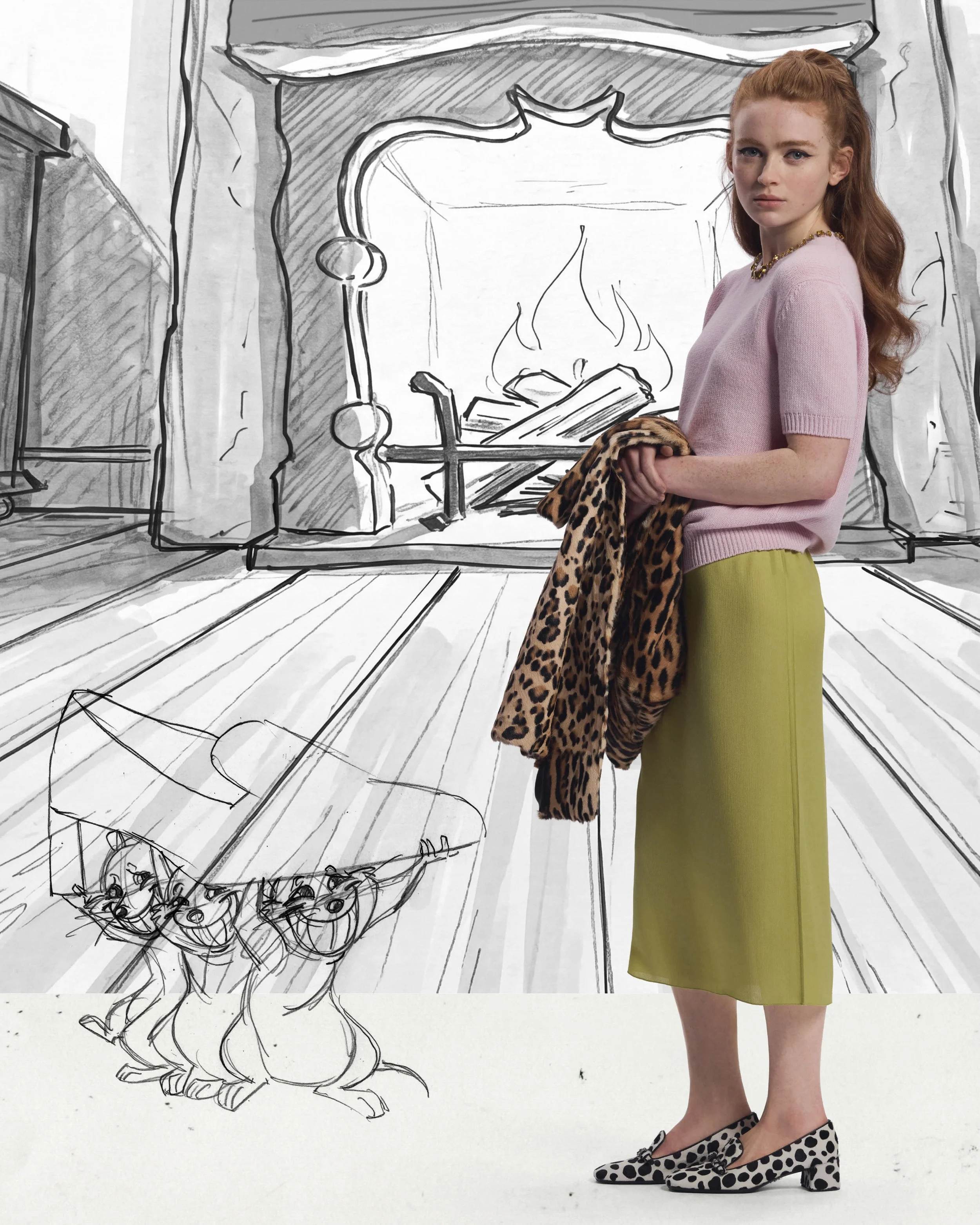
“WTF is AI?” | Prada’s hand-drawn Holiday 2026 campaign featuring Sadie Sink, courtesy of Prada
In an AI-Generated World, the Future of Marketing Is Anti-Marketing
Effortlessness has always been fashion’s favorite sleight of hand. The thrown-on look, the no-makeup makeup, the clean girl, the boutique hotel that feels like a friend’s summer house: all of it sells the promise that the best things take no trouble at all. In 1528, Baldassare Castiglione called this sprezzatura: a studied nonchalance that hides the work behind it, and luxury has been dining out on it ever since. The irony, of course, is that looking this effortless takes—well—enormous effort: elite styling, good light, film, real creative direction, and the bills to match.
Generative AI, however, has since made that cost optional, and the luxury industry has been quick to take advantage. Over the past two years, Jil Sander, Burberry, Valentino, and Gucci have all experimented with AI-generated imagery in their campaigns, and the public response has been largely unfavorable. In December 2025, Valentino’s AI-generated campaign for its DeVain handbag drew widespread criticism, with commenters describing it as cheap and tacky, while Gucci’s AI-assisted teasers for Demna’s debut were dismissed online as “slop.” The reaction suggests that consumers don’t object to being sold an illusion, rather, being able to see how cheaply it was produced.
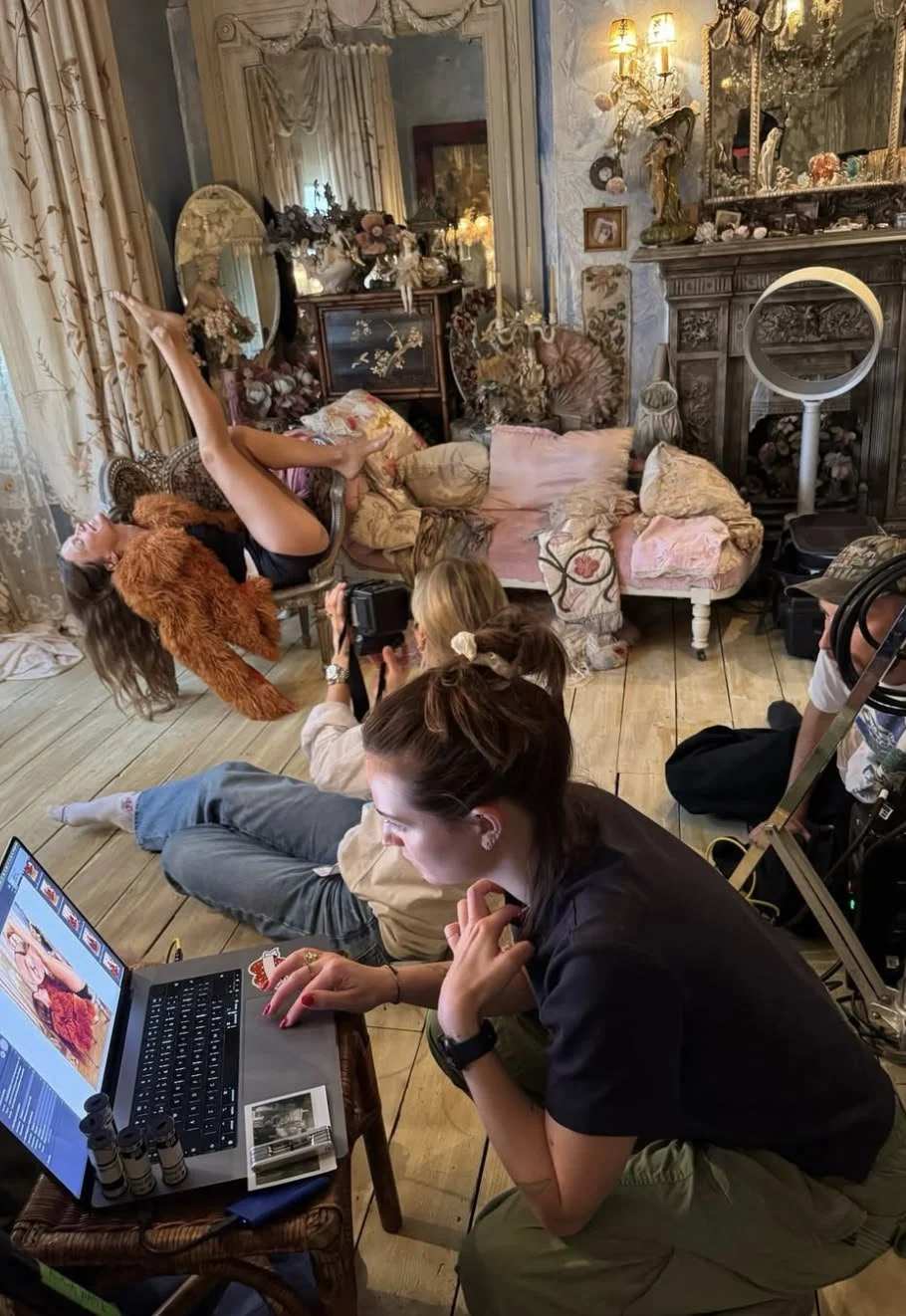
The Charlotte Simone team hard at work behind-the-scenes, courtesy of Charlotte Simone
In 2027, Effortless Is Out
In 2027, the smartest marketing will look a lot like anti-marketing. The atelier footage, the contact sheets, the sketch before the campaign, the outtake that didn’t make the cut: all of it sells a new promise, that a human actually touched the work. Brands are pulling back the curtain on their campaigns, shoots, and social posts, sometimes with captions as blunt as “WTF is AI?”, and consumers are responding. The creator economy is having the same epiphany from the opposite direction. The GRWM with a product name dropped halfway through, the unboxing, the vlog with a discount code: out. In their place are fully directed, high-resolution campaigns and short films with real production behind them. Different methods, same message: we worked for this.
The bottom line? People want to see the work. The modern consumer isn’t naïve; they know they’re being sold to, and they’ve made their peace with it. What they want is proof that someone cared enough to try. It’s a kind of respect no prompt can generate, and it’s the one thing worth buying into beyond the product itself. We have enough things. What we need is more feeling.