"Don't Be Boring": Rochelle Pinto on Vogue India, Bridal's Global Rise, and What's in Her Closet
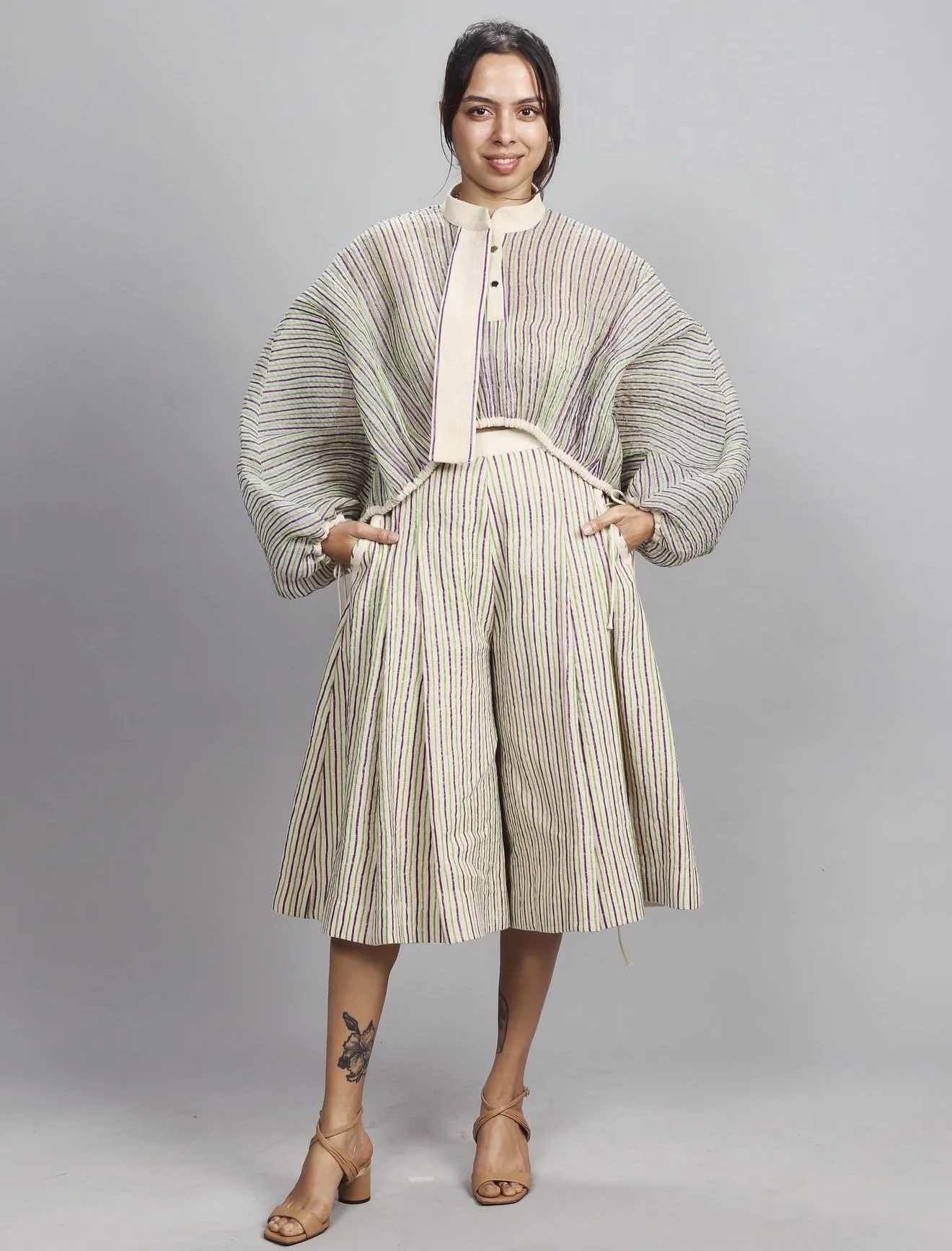
“I’m always suspicious of global equaling European or US—there is a wide world out there, and Indian designers are slowly but surely finding their markets all across it. Vogue India will continue to champion this talent, as we have done since our inception.”
The Evolution of Indian Luxury, the Global Rise of Bridal, and the Vogue Wedding Atelier
Rochelle Pinto has a rule for storytelling: don't be boring. It's a simple enough directive, except she's applying it to a country most of the West still reduces to bridal wear and diaspora demand—which means every decision she makes at Vogue India is also, quietly, an argument against that reduction. Craft over trend. Curation over ubiquity. A newspaper background that taught her to find the story in the haystack, now put toward finding designers who don't have twenty stores in fifteen cities but have been doing dedicated, decades-deep work that nobody outside their state has noticed yet. That instinct is what's behind the Vogue Wedding Atelier, and it's what took An Evening with the Editor to London this year—not as an expansion for its own sake, but because Indians, as she puts it, want to celebrate where they're from while still feeling like citizens of the world. Below, Pinto on editorial as the only lens she has, why "global" shouldn't default to European or American, and the one piece of jewelry she refuses to take off.
If someone had never read Vogue India and asked you to describe what you’re actually trying to do with it, what would you tell them?
I would say that we are expanding the idea of what it means to be in Vogue India, because a country like ours is so full of inspiration—right from our cultural diversity to our legacy of craft to our food and our beautiful languages that allow us to have poetry and prose in myriad forms. I think we’re trying to represent all of this incredibly rich inheritance and talent that our country has to offer, through the Vogue lens.
You’ve moved between digital-native media (Tweak India), lifestyle titles (GQ, Elle), and now the biggest legacy name in fashion. What did you bring with you from the early chapters of your career that you were most excited to fold into Vogue?
My newspaper background and training gives me a natural sense of knowing how to find the story in the haystack. I enjoy when we’re able to find an angle that nobody else has thought of, or present things in a way that is different from what people would expect from Vogue.
You’ve said there are no real rules to storytelling except one: don’t be boring. How do you uphold that philosophy alongside the commercial and analytical aspect of your role?
I think that comes with instinct—and the good thing is I don’t have to bear this burden alone. It’s a team of highly opinionated, high-functioning people who constantly push each other to be better, and so even on days when maybe I don’t have an answer, there are always other people I can turn to and seek advice from. My team and I often talk about the fact that our first duty is to our reader, and that is something we take very seriously.
Take me back to before the Vogue Wedding Atelier existed—what was the gap you saw in how Indian brides were shopping for luxury?
As a team, we noticed that Indian brides’ need for customization, their appetite for reintroducing their culture and heritage into the way they celebrate their weddings, was not being met by what the market had to offer. Brides had to travel all over the country to meet designers in different places and look for jewelry in different parts of India, and there were so many options it was getting overwhelming. So we thought—why not use Vogue’s curatorial strengths and our editorial vision to bring the best under one roof.
As the editorial lead, how are you curating the VWA to reflect where the modern Indian bride is heading in 2026?
It starts with curation, and that’s a collaborative process where all the teams—all the pillars of Vogue—come together. We have literally traveled the length and breadth of this country meeting designers at their ateliers, meeting jewelers, looking for people who aren’t ubiquitous, who don’t have 20 stores in 15 cities, but ateliers that have been doing dedicated work—in some cases for decades—that may not be very well known outside their state, and have something very special to offer. Then there’s a lot of work in spreading the message of the Vogue Wedding Atelier, which we do through an IP we call Evening with the Editor, where we meet our audience in different cities. It also gives us the opportunity to discover what’s happening in India in different cities, meet the cultural tastemakers, the creative talent, the fans and friends of Vogue—and all of this contributes to how well we’re able to refine the Vogue Wedding Atelier.
Every bride wants to look her best, but she also wants to be unique. What I’m quite pleased about now is that brides are also seeking to celebrate their heritage and their local culture, and this is what we want reflected in the offering at the Vogue Wedding Atelier. It’s a sense of Indian pride that you will see when you visit.
Where do you draw the line between curating a showcase and editorializing one—at what point does Vogue’s involvement start shaping what “the modern Indian bride” wants, rather than simply reflecting it?
Everything comes from an editorial lens. That is the only lens I have.
You brought your editorial vision to London this year with An Evening with the Editor. Why London specifically, and why now?
London is a city that we have engaged with very often, because not only is it a cultural hotspot that in many ways informs global trends, it also has a large Indian diaspora, and we want to connect with this audience.
Do you see Vogue India’s editorial vision physically traveling beyond India on a more regular basis? Why does that dispersion matter, if so?
Yes, because Indians, as we all know, are everywhere, and want to celebrate where they’re from while also feeling like citizens of the world. So the opportunities for Vogue India are really endless.
Designers like Rahul Mishra and Gaurav Gupta have shown at Paris Haute Couture Week, but there’s a real argument that Indian fashion is still mostly known globally through bridalwear and diaspora demand rather than as a true luxury force. What do you think it actually takes to close that gap—and is that a shift you see Vogue India playing a role in?
It takes time to start, because Indian fashion has only just become comfortable with its global appetite in the last four to five years. We have designers like Rahul Mishra, Gaurav Gupta, Sabyasachi, Manish Malhotra, Anamika Khanna who are leading the way, but there are myriad younger designers who have been selling with great success in various markets. I’m always suspicious of global equaling European or US—there is a wide world out there, and Indian designers are slowly but surely finding their markets all across it. Vogue India will continue to champion this talent, as we have done since our inception.
Bridalwear can be difficult to scale internationally—hand embellishment and artisanal timelines don’t truly fit today’s six-month retail calendars. What kind of innovation are you seeing from designers or ateliers trying to solve that—is anyone cracking it in a way that impresses you?
I don’t think this is a problem, therefore I don’t think it needs to be solved. I am not a believer in creating for the sake of creating, and when it comes to Indian bridal couture, this is the result of artisans who are masters of their craft, working at a piece for months on end—and that is what the consumer wants, that is what the connoisseur wants. I see no reason to change that.
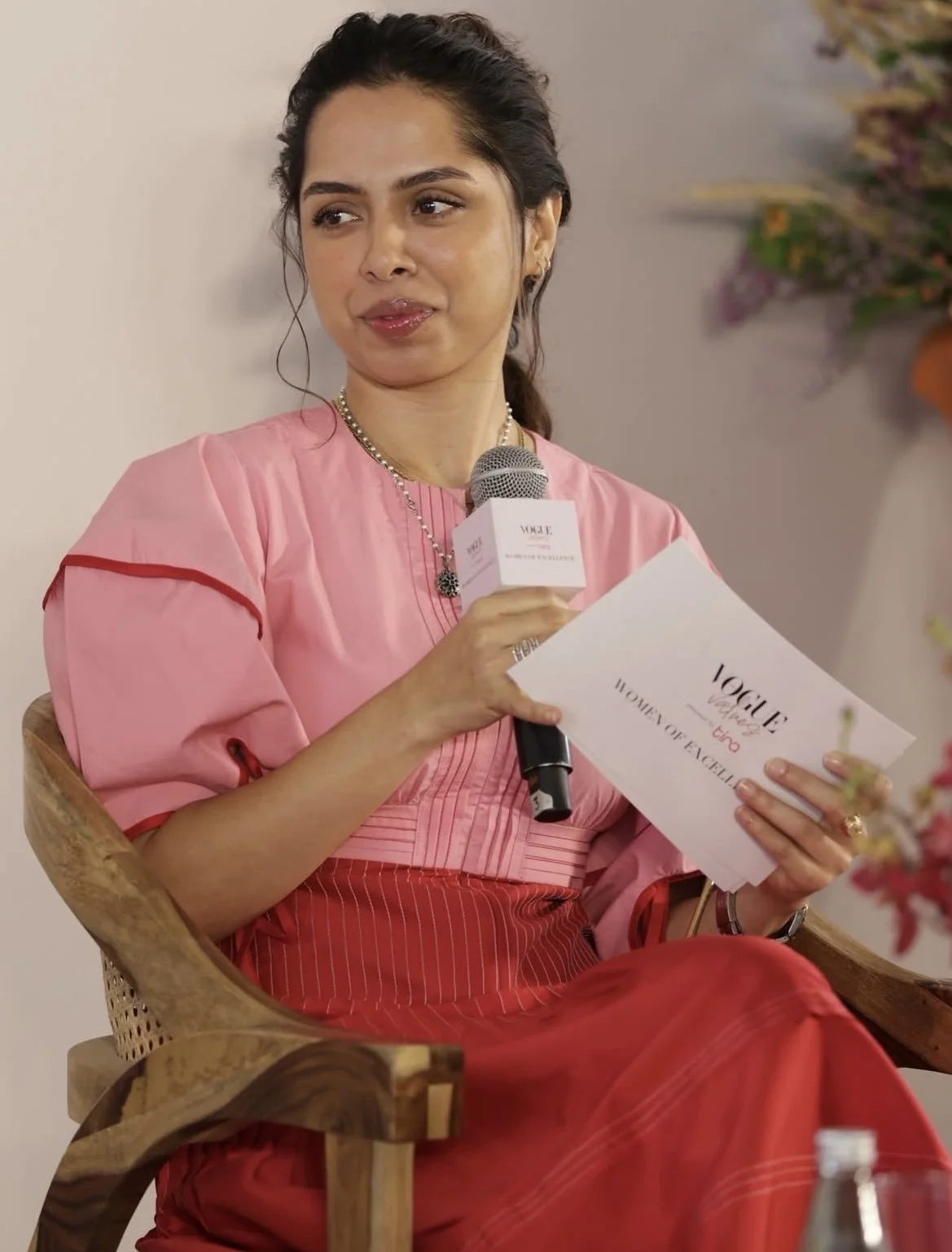
Pinto at Vogue Values: Women of Excellence
Inside Pinto's Own Closet: Chikankari, a Grandmother's Ring, and the Case for Mojris
If you had to build your own everyday wardrobe using only three Indian designers or labels, who are they and what is each one responsible for?
Rather than Indian designers, I would talk about Indian crafts, because that is something that gives me a lot of joy—when I’m able to wear something that celebrates our country’s rich legacy and heritage. So if I had to wear only three for the rest of my life, it would include chikankari, because the delicate intricacy is something that continues to blow my mind. It would be ikats, because I just cannot fathom how they’re able to achieve that level of mathematical precision with such a creative result. And the fabric would be mulmul, because I live in such a hot country that honestly, sometimes mulmul is the only way to go.
What’s the one piece in your own closet—Indian-made or otherwise—that you’d grab first in a fire?
That’s easy—it’s my grandmother’s ring, which features a carving of Nefertiti. I was obsessed with Nefertiti when I was young and read every book there was on her, so it came as a sweet surprise that my grandmother was also clearly obsessed with her—she had the books, and she had this jewel, this ring. I wear it every day and never take it off.
Is there an everyday Indian staple that you think the rest of the world is sleeping on for daily wear, not just for special occasions?
I think we make fantastic shoes in this country, and our embroidered mojris elevate any look. They’re so comfortable that you really won’t find yourself reaching for any other pair once you wear them.
Circling back to your rule on storytelling—“don’t be boring”—do you have a sovereign rule when it comes to shopping and personal style?
The same rule applies. Don’t be boring.
